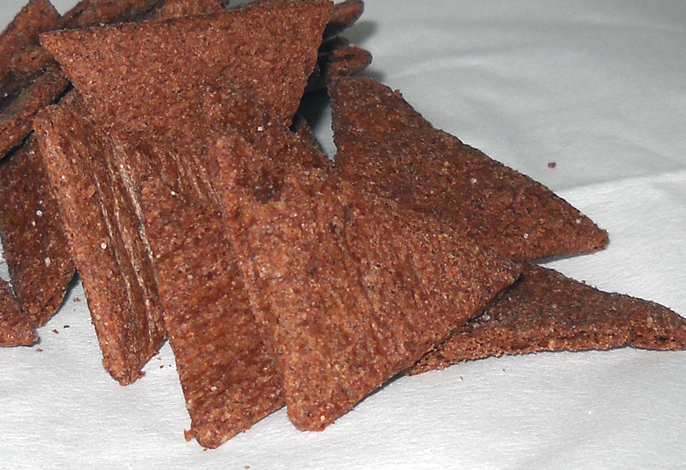
Showing posts with label salty sweets. Show all posts

Friday, June 30, 2017

Tohato Caramel Corn (with peanut)


Caramel Corn in Japan has been around for donkey's years. I actually don't know how long a donkey's year is, nor do I know who actually uses that phrase anymore. The last person who regularly used it that I knew was my late former manager in Japan (R.I.P, Darryl, I think of you every day). It turns out that donkeys actually live quite a long time. One of the older ones lived over 60 years. The original phrase either referred to the longevity of the beast, or was a migration of "donkey's ears" referring to how they have long ears. Either way, duration and donkeys have a bizarre relationship which has nothing to do with this product... well, beyond the tenuous connection in age. Tohato, which makes Caramel Corn, has been around for 65 years. So, yeah, that was a strained connection, but I pulled the two ends together.

I looked up Caramel Corn on Tohato's web site to see if this was a new variation since it has a picture of a peanut on the bag and talks about having added peanuts. It seems that the product's packaging has been revamped to reflect the includsion of peanuts. This makes sense because everything is better with peanuts (or corn) and we need to know when they are cohabitating together.


When I opened the bag, I gave it a sniff and smelled both coconut and peanut in addition to a familiar "sweet" smell. It didn't necessarily smell like caramel, but it surely looked like it. The first bite yielded a hint of salt, a very present peanut flavor, quite a bit of sweetness, and a little bit of coconut. The "caramel" part mainly comes from a sugary sweetness rather than from the sort of buttery concoctions that we're more accustomed to when we think of caramel.

I compared the caramel in this to that in Harry & David's classic "Moose Munch" because that allowed me to have an excuse to eat "Moose Munch." The Munch was definitely more buttery and sweeter. It also had a shiny, thicker coating of caramel flavor where's this seems more like a dusting of caramel. Frankly, I like the Japanese corn snack better as I felt the flavor had more complex and depth and that the peanutty notes cut through the sweetness.

Beyond the unique (and delightful) flavor combination, the texture of this is quite unique. It is very light and crispy and, while it doesn't quite melt in your mouth, it comes very close. There appear to be incredibly tiny fragments of peanut mixed in with the tender curls.

I got these in the Oyatsu Cafe's dagashi box, and you can order it from Oyatasu or you can get it from Amazon. Both sell it for the same price, though the size isn't specified on the Oyatsu Cafe's page and it's 3.45 oz. on Amazon.

Tohato has a set of cute wallpapers for Caramel Corn's bag-like mascot. They include seasonal ones that you can rotate based on the weather, though I'm guessing these days you will really only need summer and winter to reflect the reality outside your front door. You can download them here as well as watch some cute little videos if you've got time to kill at work before lunch.

Source: Oyatsucafe "Dagashi box" (part of a $15/month subscription box)


Thursday, May 22, 2014

McDonald's Salt Caramel and Mango Passion Orange McFlurry (product announcement)


When I was growing up, McDonald's had two ice cream options. You could have a shake or a pathetic little sundae made up of vanilla ice cream and some anemic chocolate sauce. Because I am not a fan of any fast food, and less of a fan of the golden arches than most other types of said cuisine, I hadn't really noticed the whole "McFlurry" business. I have a hazy recollection of when they were introduced and that they were either a collaboration with Dairy Queen or a rip-off of their "Blizzard" concept, but that's pretty much it. I've never had one in either Japan or America, but every nerve in my Spidey sense says they are probably pretty sweet.

The specimens above are new McFlurry flavors - salt caramel (252 calories) and a mixture of mango, passion fruit and orange (230 calories). If someone were to force feed me one of these, I'd go for the fruity one, though I have to say that the salt caramel one could be intriguing. The funny thing about these is not the flavors. Though they are somewhat unusual, the whole salty sweets thing has been a big fad for years now (it was in force when I left in March 2012) and passion fruit is the only slightly uncommon element in the fruit one. The bizarre thing is that McDonald's plans to offer these only between 10:30 a.m. and 1:00 p.m. It strikes me as weird that they'd choose such a time period as it makes these seem more like "brunch" options than a sweet treat. Personally, I think offering them from 1:00-4:00 would have been a better choice, but I'm guessing this limit is based on the effort and time it takes to make them than when consumer demand might be highest.


Thursday, April 24, 2014

Kirin Salty Lychee Drink (product information)


Kirin is doing some sort of promotion in which they talk about the combination of fruit and salt. I am very aware that salt can do a lot of things for various dishes, including boost the sweetness level of various types of fruit (watermelon in particular) as well as add complexity to chocolate and other types of sweets. However, for me, adding salt to a beverage with a sweet base turns it into something resembling an isotonic drink (like Gatorade). This is not what I sign up for when I buy a (hopefully) refreshing bottle beverage.

The inspiration for this is supposed to come from Thailand where pickled lychee beverages with salt are supposed to be a mother-made tradition. I get that information from Kirin, so I don't know if it is true. At any rate, each bottle apparently has a tiny little mother preparing a drink in a miniature kitchen for you so there must be some truth to it.

Kirin recommends some "recipes" if you buy this elixir. They say you can ice it up and crush a bit of mint into it, make ice cubes out of it and eat them, or mix them with seasonal frozen fruit to make a "punch". To me, no matter how you mix it, this has disaster written all over it, but then I'm not one for salty beverages.

Monday, December 9, 2013

Sanko Seika Snow Inn Chestnut Cream Sembei


It's the most wonderful time of the year. Yes, it's when all of the chestnut sweets start showing up on shelves in Japan... or Japanese markets in my local area. I was thrilled when I saw these chestnut and milk sembei at Niyija market for $2.99. Though I sometimes have issues with the combination of the baked rice flavor of sembei coupled with sweet frosting-style flavorings, this was really too enticing to pass up, even at a somewhat premium price.

The picture on the ront of the bag shows a mont blanc confection as well as a few chestnuts. One has to consider that these are merely there to create visions of such things in your head rather than tell you what the sembei actually tastes like. The truth ended up being that this actually was much closer to mont blanc than chestnuts. No one was more surprised by this than me. As an enormous fan of mont blanc, you'd think it would trhill me. Not quite...


The issue with this was that there was the hint of chestnut, the sweetness, and a hint of what seemed like alcohol. Sometimes, there is brandy in the chestnut paste used in making mont blanc, and I think that flavor was conveyed in the frosting on these rice crackers. This is not a particularly bad thing, but that flavor was stronger than the others (aside from the basic rice cracker flavor itself).

I liked these, though not as much as I'd hoped. I think that they do convey the flavor of chestnut cream, but I'd like the flavor to be somewhat more potent. I'm more than happy to have this bag as a salty sweet, but, if it shows up again next year, I wouldn't buy another bag. It's good as a novelty, but not something that I'd seek again and again - at least not for the standard price.

It's interesting to note that the Sanko Seika "Snow Inn" line is turning into the rice cracker equivalent of weird KitKtas. Besides lemon and mango sembei, they've released this chestnut cream variety as well as a strawberry cream one. Though American fans of Japanese snacks are unlikely to get as excited by sembei as by chocolate-covered wafers, I am intrigued by their flavor diversity and will continue to sample new products as long as they keep making them.


Monday, July 15, 2013

Glico Apple Custard Pretz


Pretz are to pretzels as Japanese KitKats are to candy bars. They're the bold adventurers of the pretzel flavor world and come up with more provocative flavors than their more popular cousin and rival, Pocky. Pocky is hamstrung to a certain extent by the fact that it's distinguishing feature is a coating of chocolate or chocolate-like substances. That means that it is hard to develop savory flavors for it. Pretz, which is unfettered in this regard, can prance about nakedly in any environment it chooses - sweet, savory, bold, weak, vegetable, fruit, etc.

The naked Pretz in this case comes with sweet flavorings. These options, though possible in the pretzel world, tend to be relatively rare without the inclusion of coatings. Besides this apple custard variety, there is also a strawberry one and the remainder of the family is showing its stuff in meaty, fishy, savory options like takoyaki, okonomiyaki, wasabi, and mentaiko. Those are perhaps their best turns. The more "mundane" options are buttered potato, pizza, tomato, and "salad".

Looking back, I was surprised to see that I had reviewed 10 varieties of Pretz before, and I liked every single one of them. It caught me off guard because I don't really seek it out or consider it all that interesting. Further inspection revealed that most of the flavors I tried were somehow "weird" and no longer available. I should be more impressed with the brand, but like a woman with a great boyfriend that she somehow manages to take for granted, I simply did not notice. I'm sorry Pretz. I will try to do better by you.


I can say that particularly now because this flavor keeps the batting record for the brand intact. I really liked these. Though the smell was slightly funky and off-putting, the taste was surprisingly good. There is a first hit of very faint custard followed by a salty apple flavor. As you crunch your crispy, fresh pretzel stick, the apple gets stronger and it takes on a more astringent apple cider flavor. It fades away just a bit as you finish off a stick.

It's not out of the question that one would find the apple portion of this overbearing or the mix of salt and sweet unappealing. Personally, I sometimes salt apples when I eat them anyway so this is a natural pairing for me. The custard element is relatively subdued and tends to lend a richness and balancing flavor rather than a strong element, so don't expect too much on that front. For me though, this really "worked" and I'd buy it again.


Monday, May 13, 2013

Meiji Hokkaido Aragiri Choco Potato


The last time I tried consumer-level chocolate-covered potato chip snacks, it was a disaster, so I was concerned that these might be scary as well. What was more worrisome (can you see my brow knitting as I fret over candy-covered salted snacks?) was that the former disaster was also made by Meiji. If I get more wrinkles, I'm going to have to consider a suit against said company.

Fortunately, these lacked the ingredient which I think torpedoed my last attempt and that was "cheese powder". There as a horrible pungency to them which killed the love I feel toward chocolate-covered salty things. And, yes, I do love them. One of the great loves of my life are Royce chocolate-covered chips and Snyder's chocolate-covered pretzels. I don't love them often, no, no, for that would mean that I'd have to buy new pants, but I do love them all too well when I have infrequent encounters with them.

This treat comes my way via the kind folks at Candysan, that's the importer I mentioned last week that beats the prices of local Asian grocery stores. I'm continuing to make my way through the generous box of snacks they sent me. They're offering this for $2.01 or 198 yen or even 1,54 euros. I never considered offering prices in the final currency, but they're an international sort of business. I realize this every time I go to their site to link to the product and find that I have to click on the little American flag in the upper right hand corner because my browser is apparently too dumb to recall my preferred settings (or I'm too dumb to configure it to remember... I guess I lived in Japan long enough to "take responsibility" for things that are my fault).


At any rate, I was pretty skeptical about the appeal of this particular product to me personally because of my less than enthusiastic response to white chocolate. I was pleased that they are sufficiently salty for the salty sweet aspect to shine through. Sometimes the saltiness is so subdued that your tongue has to think extra hard to find it. This is not what I want. There is also a nice crunchy chip hidden beneath a fairly thick layer of white chocolate that feels pleasantly cool and rich on the tongue.

The white chocolate is "the rub" on this, at least for someone like me who can be rubbed the wrong way by it. It's good white chocolate, actually, in that it's not horribly cloyingly sweet as the white stuff can sometimes be. It is fairly sweet, but it also has a nice buttery flavor and the sweetness is cut to some extent by the salty chips. That buttery element explains the baked potato with butter illustrated on the front of the box at least. On the down side, the white chocolate is soft and that's not something I like, as my refrigerated strawberry Pocky Midi in my review mentioned.

I have mixed feelings about this that make me wish my ratings system were different and that there was something between "happy" (which means I'd buy it again) and "indifferent" (which means I wouldn't buy it again). I enjoyed this and am very glad that I had the chance to sample it. However, I'm not sure I'd have it again. It has the same quality that bad pizza holds for me. I don't love it, but I can see craving the experience again when the planets are aligned properly and the stars tell me it is time to do so. There's something weird about wanting something you're not wild about, but it holds a particular charm. If you love white chocolate and the salty sweet combination, this is a no brainer to try. If you don't, and I do not, then it's an iffy proposition.


Monday, January 9, 2012

Echigoseika Funwari Meijin (Kinako Sembei)


There are few things in Japan which I consider to be a type of food crack for me. In fact, I think that even using "crack" to talk about the addictive quality of certain things is monumentally over-used by people. I don't think I've ever needed to use that term before. There is a first time for everything.

Echigoseika makes several varieties of "fluffy" (funwari) sembei. In fact, I'm not sure if I can accurately call it sembei, but I do because that is the section that it is sold in in snack shops and markets and glutinous rice is one of the main ingredients. Well, it's the third one after sugar and vegetable oil. The fact that the first two ingredients are part of the bad food trifecta (the third is salt) should indicate how healthy these must be. That is to say, not very much. The other two flavors are white chocolate and cheese. The thing all of these have in common is that they are light, delicate, and they melt in your mouth when you eat them. They are like nothing I have ever had before in the U.S., but I can say that they have a strong enough texture for minimal crunch and a melting quality that makes them collapse in a pile of flavor on the tongue.


As one might guess from the introduction, I loved, no, no, ADORED these. The kinako (roasted soybean powder) gives them a roasted nut flavor which is similar to peanut butter. They have a great blend of salty and sweet layered on top of the nutty flavor. This comes together in a burst of incredible flavor which is potent, but not overbearing. I'm grateful that a bag comes with 6 individual (14 gram/.5 oz.) packets in order to encourage portion control because it would be easy to open a bag and just eat the whole thing. While each packet is only 72 calories, eating all 6 of them at once would pretty much constitute the better part of a meal's calories. 

These are awesome. If you see them, buy them and gain some weight enjoying them. Unless you really hate salty sweets or are super, duper sensitive to soy powder flavor (though this really does taste peanut-buttery), I can't imagine these would  not be a hit. Like the white chocolate sembei, I can't believe these would not make an excellent souvenir if you're in Japan. Even fussy Western palates should find these quite tasty. 


Monday, September 5, 2011

Kabaya Salt Charge Tablets


Now that I only do two reviews per week, I feel somewhat obliged to choose more interesting products. I'm guessing this will last a few weeks then I'll go back to reviewing various chocolates and cookies which are not only more pedestrian, but more readily available. While talk of Japanese snacks often focuses on the bizarre, the truth is that not so much of what is on offer is all that strange...at least not after my years of already reviewing various snacks.

In light of my current mindset, which is somewhat guilty at reducing the number of reviews, I didn't hesitate to snap up these oddly flavored sweets. It didn't hurt that they were only 69 yen (90 cents) at Okashi no Machioka snack shop. The fact that they are plum (ume) isn't really all that odd, but the fact that they position salt as a favorable aspect is. The Japanese clearly aren't as uptight about salt as Americans, who are told constantly that salt consumption is a one-way ticket to a heart attack.

This is part of a series of "tablets" Kabaya is releasing to meet various needs. Others include Calcium, grape sugar, and amino acids. The Calcium is to help you not grow old looking like a question mark and the grape sugar is to fuel your big brain's function. Amino acids are to help with muscles. All of them are positioned for people engaging in sports, except Calcium which appears to be for old people who do stretching exercises and mothers pushing babies in prams. I guess the salt charge is to help you replenish precious sodium that you've excreted through your pores during your vigorous workout. Since most Japanese folks I know exercise once a month or so, I can't imagine much demand for these except for those people who think a plum-flavored salt lick is a good time.


Though these are called "tablets", they are balls. I think "tablet" in Japan merely means it has some pressed powdery component, which these do. The outside is a hard suckable candy and the inside is pressed citric acid powder, salt and sugar. Besides supplying you with precious salt, they also offer Vitamin C, B2 and amino acids. The whole bag provides 150 calories and there are 14 little balls in the bag, so about 10 calories each.

In terms of the taste, the outside tastes a lot like the Mintia plum mints that I liked so much. It's both sweet and sour in a fairly balanced way. It tastes funky, but good. The inside, which takes several minutes to reach, is white powder which is quite salty, but also tart. It's not bad, but I could have done without the middle and stuck with the outer shell.

These aren't bad, but they are weird. They're the kind of thing you might find enjoyable in exactly the right frame of mind, but you're more likely to take if you really feel you need the "health" benefits of the additives.


Tuesday, March 22, 2011

Meiji Chip Chop


There's a scene in the Simpsons where Bart asks his father what a muppet is and his father says,"Well, it's not quite a mop, not quite a puppet, but man... So, to answer you question, I don't know." That is where I'm at mentally on how to classify Meiji's "Chip Chop" snack. It's not quite a chip, not quite a chop. So, I don't know.

I'm not sure what inspired the name of this product, but frankly, it comes across as vaguely racist to me for reasons I'm not entirely sure of. It could be that somewhere in the recesses of my twisted and sugar-addled brain (hey, I have to eat the Chip Chop to review it), I'm associating the name quite inappropriately with "chopsocky" movies, a term applied to Hong Kong martial arts movies which is generally considered racist. 

Getting to the Chip Chop and away from my febrile free associations, the best way I can describe this is a menage a trois between pie, cracker, and cookie. Meiji describes this as ultra-thin dough which has chocolate sandwiched between it. That's a good basic description of the process, but it doesn't account for the way the dough seems to be a little flaky like pie, but to not chip apart or crumble like most pie-based foods. It has the tensile properties of a cracker and the crunch and flavor of a crispy cookie.


The beauty in this is in both the rich chocolate flavor combined with a perfect sprinkling of salt and the crispy texture that makes you almost feel like you're eating a potato chip. The only thing that mars a nearly sublime snack experience is a bit of an odd taste which I associate with processed chocolate. I think it's the same thing which scares me away from crispy chocolate chip cookies as it's common in them. That being said, it didn't put me off of these at all and I am inclined to eat them again.

One 30-gram (about 1 oz.) bag of Chip Chop has 155 calories and is well worth it if you decide to forgo the potato chips in favor of something sweet. It is pretty much a trade-off nutritionally. I got these in my New Year's fukubukuro, so I'm not sure of the retail price but I'd be surprised if they weren't commonly available for 100-130 yen ($1.22-$1.60) for this size. I've seen larger bags than this on offer. 

If you're not put off by the possibility of a certain preserved flavor to your chocolate, I'd strongly recommend giving these a try even if you may have to get them a little more expensively via an importer. The combination of sweet and salty coupled with the satisfying texture is worth a little extra cost. 


Monday, October 11, 2010

Royce Chocolate-covered Potato Chips


Way back when I started this blog, I reviewed some low rent chocolate-covered potato chip snacks. In that post, I mentioned that students had given my husband and I some good chocolate-covered potato chips and those were what had inspired me to try the cheaper ones when I ran across them. These Royce brand chips are the very ones. They are, at least to me, the gold standard on the whole chocolate-covered chip business. Well, that's if such a pedestrian thing can even have a "gold standard".


A rather largish box (190 gram/6.7 oz.) of these was given to my husband, so I had to track down the cost on the manufacturer's web site. This portion, which is very generous is 693 yen ($8.09). You can buy these on-line if you can deal with Japanese, or you can find them at some department stores. You can get cheese chocolate (white chocolate-based) as well as caramel variations. There are also some crunch ball versions which I had had as an office "omiyage" (souvenir) back in my days as a cubicle-dwelling drone.


When you open the bag, these mainly smell of potato chips, but, of course, the chocolate is there as well. The chips are fresh, perfectly fried and salted and carry a really nice potato flavor. Quite often, chips are saturated with the flavor of oil. In Japan, often times cheaper chips taste of oil that feels like it has been used too many times.These have none of that unpleasantness. There is a really satisfying mixture of sensation on the tongue with these because the chocolate is cool and the chips feel a little warmer.

The chocolate on the chips is nice milk chocolate with just the right balance of sweetness to compliment the salty chips. The only problem with these is that they can be extremely addictive. They are one of the few things which I can lose control while eating and overeat. Fortunately, I never buy them myself and only have to face temptation when given a gift. The only reason these don't get a "very happy" rating is that I actually can't say I'd buy them again, but I'd sure enjoy eating them if I was given another box. Mainly, the issue is that chocolate covered chips aren't the sort of thing I crave unless they are already in front of me as an open bag of temptation.

Monday, August 9, 2010

KitKat Salted Caramel (Big Bar)


I'm no foodie, or gourmand, but I do check out the food porn sites for recipes on a regular basis and I've seen people offering up elegant pictures of blocks of caramel with big salt crystals lying on top of them. I don't know if salty caramel is one of those things people who think they're too good for a Sugar Daddy eat, or if it is now as mundane as a KitKat.

Salty sweets, of course, are old hat by now. In fact, I think I've tried some variations on this concept before (salty vanilla, for instance). I was actually looking forward to trying this particular player in the endless parade of Japanese KitKats. Even though I don't like caramel much, I do like salty sweet combinations when they work.

I found this at 7-11 for 120 yen ($1.40). It's 44 grams  (1.55 oz.) and the entire bar is 238 calories. I don't know when it was introduced, but I couldn't find it on Nestle Japan's webs site for KitKats at the time this review was written (August 6). I've found that the 7-11 shops in my area seem to get new KitKats before they show up on the manufacturer's site sometimes. This was also the case with the cola and lemon squash KitKat.


This bar smells like strong, fake caramel. That's not such a shock. One has to expect such things. The thing that I was most interested in was how prominent the salt as going to be and how strongly chemical the caramel came across as. As for the former, this is a very salty bar.  The salt definitely hits you pretty hard, especially on the first bite. On the second bite, it mellows a bit because it's usual for ones tongue to acclimate to salt quickly and taste it less strongly. The caramel is also definitely there and the fake nature of it was muted by the salt and the pleasant combination with the sweet milk chocolate coating.

I really enjoyed the salty sweet aspect of this and was pleased that the salt wasn't hiding in a dark corner where it could barely be detected. That being said, I could easily see where someone else might find the salty aspects to be overbearing. In fact, it was so salty that it sort of burned my mouth a bit, but I still liked this. It helps that it's a "big bar" and is full of fresh, crispy wafers. I enjoy the higher wafer to chocolate ratio so that gave this a leg-up right there. If you're open-minded about the salt and sweet combination, I'd recommend giving this a try, but be prepared for some potent saltiness.

Wednesday, August 4, 2010

Kameda Oyatsu Cafe Butter Sweet Sembei

Note the design motif - they're supposed to be for tea time, hence the tea cup.

Butter flavored sweets may be becoming a bit of a fad. First, there were the buttered toast Country Ma'am cookies and now this sembei. Honestly, this has been around for a few months and it has taken me some time to get to writing a review. There are 17 crackers in the bag, and each is 8 cm x 3.5 cm. (3.15 in. x 1.4 in.), and it takes me a long time to eat a whole bag of this size. It only encourages me to procrastinate in doing the review.

These are available in most supermarkets in Japan as well as drug stores that carry food. I paid about 160 yen ($1.84) for them. Given the large quantity, this is pretty good value. It'll take awhile to get through such a big bag unless you're pigging out on a regular basis.


These don't smell like much other than a faint soy sauce flavor and the usual "baked rice" scent that comes along with sembei. They're light, crispy, and have a great texture. The flavor is hard to pin down because it's a mixture of elements that you wouldn't expect. Mainly, it's an oily, fake butter with light soy sauce flavoring and salt. They're also a little sweet. The ingredients reflect all of these flavors - mochi rice, vegetable oil, butter oil, soy sauce, sugar.

Though these sound strange, somehow all of these flavors come together and are tasty. I wouldn't say they're the best thing I've ever put in my mouth (it's not that kind of blog) and I can't even say that they are at the top of my sembei experience, but they're good. I'd pick up another bag some time.

Thursday, May 27, 2010

Crunky Chestnut


I'm a sucker for anything chestnut, but I haven't been keen on white-chocolate-based Crunky bars since trying the caramel latte bar. It's not that there was anything so wrong about that bar, but I haven't been wowed by the Crunky variants. Like plain KitKats, the regular milk chocolate version of Crunky seems to always be superior to the imaginative flavor offerings.

For those who are unfamiliar with Crunky, it's Japan's version of a Nestlé's Crunch bar, which is available in Japan, but in limited markets. The main difference between Crunky and Nestlé's bar is that the former is made with crispy rice and the latter with malt puffs. That makes the crispy bits in a Crunky carry more of a cereal flavor in addition to adding texture. In Nestlé's bar, the crispy rice bits don't do much for the flavor profile.


This particular Crunky smells a bit like coffee and caramel, but in a very subdued way. One of the ingredients for this is caramel, so that part isn't surprising. I think that chestnut often carries a bit of a muted coffee-like flavor. One of the other ingredients if tamarind, a fruit that is used to make jams, drinks, and frozen confections in some Asian countries. It's also a natural laxative, though I'm hoping that has nothing to do with this bar.

The sweetness of this is not too overbearing, and the chestnut flavor seems light and earthy. It has the sense of tasting like real chestnuts at about 50% their actual intensity. Since chestnuts aren't powerfully strong anyway, it's just a bit more muted than I would prefer. I would have preferred a richer taste and I think a little salt might have developed the flavor profile a bit better.

One of the things I like about Crunky is that it gives you a lot of great texture without too much sweetness. That being said, I have to ask myself if I would buy one of these bars again. As decent an experience as this was, I'm not sure that it's an experience worth repeating, particularly if you're calorie conscious (and I am). The entire 48-gram (1.7 oz.) bar is 269 calories. There are 24 little blocks and each has 22 calories. For such a small amount of pleasure (about half the volume of a Hershey's kiss which weighs in at 25 calories), I'm not sure it's worth a repeat beyond the novelty of a first experience.

Wednesday, October 28, 2009

Salty Caramel KitKat (bite-size)


Back in college, I majored in psychology. In order to qualify for a degree, we all had to take a course in research and part of that was training rats. Contrary to popular belief, it's uncommon to train them in mazes. The usual way to train them is to put them in something called a "Skinner Box".

The box is like a little cage but it has a bar in it which releases a food pellet when the rat happens to press it. At first, the rat may accidentally hit the bar as it scurries around the confined space trying to get out. When it gets a pellet, it may then scurry around some more looking for others and accidentally hit the bar again. Eventually, it'll figure out that pressing the bar gets a food pellet.


As I was considering these bite-size KitKats, I was thinking that these are like food pellets for humans. They don't really offer much over a regular KitKat bar, which is hardly unwieldy and difficult to manage. These do take away the "cumbersome" task of biting portions off of the bar, but I think the main point of offering this type of KitKat is to market them differently. Either that or they're priming us for psychological experiments with a gigantic Skinner box and this is a plan to introduce the form our food will take so that we'll be accustomed to it when the time comes.

My husband picked up these salty caramel bite-size KitKats at New Days for about 100 yen (about a dollar). There are 13 little pieces in the bag weighting in at 35 grams (1.2 oz.). You do get more chocolate per bite in this format, but I'm more of a fan of the wafers in the KitKats so that wasn't a plus for me. Also, there are 186 calories in the entire bag and I think this form encourages you to eat more than a regular KitKat which comes with two packs of two fingers. You're likely to eat half of a bar and all of this bag.

The KitKat bites smell like fake caramel, but so did the caramel purin KitKat minis (which incidentally are back on the shelves at this time because of Halloween), and those were better than expected. When you first take a bite, you get the strongest taste of salt. After that first bite, it tends to fade a bit but is still there as a pleasant addition. The caramel is a little on the strong and artificial side, but not overwhelmingly so. The chocolate is plain old Japanese milk chocolate (slightly bittersweet) and I think having more of it works well here because it stops the caramel cream from being a stronger flavor component.

I didn't expect to like these, but I ended up finding them pretty pleasant. I will say though that they may be less appealing if you're very sensitive to artificial flavoring or not fond of salty sweets. If neither of those is the case for you, I'd recommend trying these.

Monday, September 7, 2009

Meiji Marron Chocolate Bar


Chestnuts that are still in their protective cocoons are scary things. They have a hairy, barbed cover which is taxing to remove. When I was a kid, occasionally we'd come across them and fight to pry them free of their prickly casing. Of course, as a child, I really was not fond of eating them because we just tasted them raw. Chestnuts are best when roasted, mashed, or processed in some fashion. Raw ones are a bit on the soft side and not very flavorful. I guess the same can be said for many types of nuts, but those types didn't grow in the area behind my family's property.

Who knew that I'd grow up to love them as an adult who lived halfway around the planet. Fortunately, Japan loves chestnut flavored sweets more than America so every year, I can happily sample new things. I was delighted when I found this Meiji Marron (chestnut) bar at a local market for about a dollar (100 yen).


The bar smells like regular chocolate. It has a thin vein of chestnut running through the center which can't be detected by scent. The first taste is of pretty good quality milk chocolate that is creamy and fatty with a small hint of that distinctive Japanese chocolate bitterness (but less than plain chocolate bars) and what seems to be a coffee-like flavor. The chestnut filling is relatively weak at first, but offers mild chestnut flavor and a bit of salt. It's quite nice, but it takes several bites for the chestnut flavor to develop on your taste buds. While eating the first two squares, I couldn't detect the chestnut as much as in the following two pieces.

The bar has 12 squares and 280 calories. I ate 1/3 of it at a time because I am trying to keep my junk food calories down to 100 or less each day. I think the experience might have been more profoundly enjoyable if I'd have eaten more at once due to the way the flavor needs to build up to be detected. The saltiness really seemed to work in this bar, though those who aren't fond of salty chocolate may find it off-putting.

The ingredients for this are a bit curious. It includes a variety of "powder" ingredients including chestnut, cheese, whey, cream, and sweet potato. Getting the flavor profile seems to have required quite a mix. Personally, I'm gratified that the cheese powder didn't come through in the flavor.

I would definitely buy this again. The only thing that stops me from giving it a "very happy" rating is the fact that there isn't enough chestnut filling for my tastes, or at the very least not enough of a strong chestnut flavor relative to the tasty, but not overly exciting, milk chocolate.

This was also reviewed at Ebidebby's "Snack Love".

Wednesday, July 1, 2009

Double Cream Brown Sugar Sembei


I've been questing to find a combination of a salty-sweet sembei marriage that pleases my picky palate. I knew it was out there somewhere, and brown sugar and cream (two-thirds of what makes caramel what it is) seemed like a good place to look for my edible salty-sweet fiance.


This particular bag of sembei didn't make the trip from the store very well. Several of my packets were smashed and the crackers broken. I'm not sure if that is how the shop got them, or if that is what I did to them when I crammed them into my backpack with 8 bottles of Diet Coke. At any rate, this bag has 24 large crackers packaged in 2-cracker packs for about 170 yen (about $1.70). Each two-pack is 62 calories and that doesn't seem too bad for something streaked with what appears to be sugary frosting.


The crackers are the "soft" or puffy type of sembei rather than the brittle thin type. They clearly are made by folding over the dough and are a little hollow in the center. They smell of brown sugary goodness and are nice and crispy. When you bite into them, they tend to let loose with a lot of little hard crumbs though so I recommend eating them from the packet and allowing the flotsam to fall back in the bag.

The taste is at first a bit of a "burnt" brown sugar flavor which is reminiscent of molasses followed by a clearly discernible, but not overpowering hit of salt. The combination seems to be in perfect balance. I can't really taste the cream, and to be honest it isn't high up on the ingredients list so I have my doubts about the volume of actual cream in them, but I don't think these need more of anything. They are great as they are.

I loved these and think they'd make an excellent substitute for a cookie if you were in the mood for something sweet. After I finished the bag, I wished I had bought another to have around. While I was able to control my eating for the most part, it was extremely easy to eat 6 crackers in one sitting when I was hungry and throwing caution to the wind. By all means, give these a try.

Wednesday, June 24, 2009

Ito En Salty Lemon


When it's really hot and the sun is beating down on your, there are certain things that sound really good. One is the notion of ice cold lemonade. Another is something salty in order to replenish what you've been sweating out. Of course, I don't actually sweat much so I'm guessing I don't lose much salt. Nonetheless, as I trudged around in the blazing sun feeling dehydrated and overheated, I was thinking this salty lemon beverage would really hit the spot.

This drink was made by a company called Ito En which makes a variety of other beverages including tea drinks, fruit and vegetable juices, and sports drinks. They're also controlling Tully's coffee brand in Japan and Evian water. The company was established in 1966, which makes it a relatively young business by Japanese standards. They're best known for their bottled teas, especially green tea and barley tea.


The Salty Lemon is touted as being "calorie off". This is Japanese English for reduced calorie. The entire 500 ml. bottle has 81 calories and is sweetened with Sucralose artificial sweetener. It also has 1000 mg of Vitamin C and, of course, added vitamins and lemon are ingredients.

This smells ever so vaguely lemony with a tiny hint of something which is slightly medicinal. The first thing that surprised me when I poured it was that it wasn't carbonated. For some reason, I expected it to be fizzy, but there was really no reason for me to expect that to be so. The best way I can sum up the flavor is that it tastes like a Vitamin C supplement dissolved in water. The lemon flavor is very subdued. It has no acidity or bite and mainly seems like a weak lemon isotonic drink. It's not exactly repugnant, but it's not really pleasant either. Mainly, it's weakly lemon and weakly salty and lightly sweet. It really does remind me of what you'd get if you dissolved some sort of powdered medicine or supplement in a glass of water and drank it for your health.

If I were parched and had no water at hand, I'd drink this. However, there is no joy in it and I threw away the rest of the bottle. Certainly, I wouldn't buy it again, nor would I recommend it to any but someone who was sick and wanted to drink down a bunch of Vitamin C.

Monday, June 22, 2009

Sequoia Salty Vanilla Chocolate


My husband and I were meandering around a Family Mart convenience store when he spied this "salty vanilla" Sequoia bar. For those who don't know, Sequoia is an original Japanese brand of wafer bar. It isn't a KitKat knock-off. It just looks like one. He said, "this looks like something I'd like," and hence a review was born. I'm always much more likely to try something if I know I'll just have a bit and he'll finish the rest. This is one way to keep the sweets consumption under control for me, though I can't say it works so well for him. It's not that Sequoia bars are too huge for one person to eat, mind you. They're about the total volume of two and a half KitKat fingers.

I sort of wonder how someone decided that salt and vanilla would be a good combination. A comedic collision like the ones about gettings one's chocolate in another's peanut butter comes to mind, but I'm guessing this has more to do with the people at Furuta jumping on the salty vanilla bandwagon or just plain running out of ideas for what they could easily slap together without spending a fortunate on food coloring. I can see the buchos (higher level managers) brainstorming and talking about new flavors. Suggestions for grape, blueberry, or melon are bandied about but no one wants to buy purple, blue or green food dye. The guy who suggested salting down the white chocolate probably got an extra bonus.


I kept this bar in the refrigerator because the weather has been so hot lately. Nonetheless, this was very soft when I took it out for pictures. I wouldn't carry this around in my pocket for long in the summer.

The chocolate coating is advertised as "milk cream" and the "center is "vanilla cream". I think that part of the problem I had with this bar is that I couldn't taste either vanilla or salt much at all, and that is likely because the flavoring is not in the coating, but only between the wafers. Mainly, I could taste shattering white chocolate sweetness. This is an incredibly cloying bar. The strange thing is that I kind of liked it despite that, but probably only in the way that one sometimes really likes a super strong hit of sugar. The flavor had very little depth. I am confident that I wouldn't be so fond of it on a revisit.