Showing posts with label baked goods. Show all posts

Friday, July 7, 2017

Maybelle Lemon Donut


I was both looking forward greatly to this donut (because it's lemon!) and wary about how it was going to be (because, Japanese). I am not a huge eater of donuts, but I did find that packaged donuts in Japan had some very predictable problems. It's not that American shelf-stable donuts are any great bargain either, but they don't suffer from the same distinctive issues as Japanese ones. The only one that I ever really craved and ate multiple times was a "rosette" donut. It resembled an old-fashioned donut and it was more about texture than anything else. On rare occasions, I still crave one, though not as often as I crave a fresh "angel cream" donut from Mister Donut. That was my one, true, and thoroughly complete donut love. All others pale in the face of it and none will ever measure up to it. Sigh.

It probably isn't great to ponder the best experience you ever had before contemplating the new one before you, but here I am. It's like remembering the first time you saw the original "Star Wars" movie just before you saw that abomination with Jar Jar Binks with the hour-long pod racing sequence. You're just setting yourself up for deep, deep disappointment.


This is a classic shelf-stable Japanese donut, and, in this case, "classic" isn't a good thing. The defining characteristics of one of these confections is that the exterior is slightly greasy so that you can't eat it without getting a film on your fingers and the interior is oddly oily, but still so dry that you need to have a beverage along with it so as not to feel your tongue has just wandered vaguely through a small desert.

The best part of these was how they smelled. The fragrance was that of subtle lemon and that familiar smell of "baked goods" that you get when you walk into a bakery. There are some very sparse bits of candied lemon in the donut, but not nearly as many as would be nice. These bits don't yield a whole lot more lemon flavor, but have a nice sugary crunch.

This is made by a company called Maybelle which makes a variety of products that include both waffles and donuts. Their lemon donut is sold in a case which is labeled as 8 x 8 and I'm not sure if that means you get 8 boxes with 8 donuts in each or if that refers to box size. I couldn't locate a price, but this does look like the sort of thing you could pick up at a convenience store for 100-200 yen or get in a large souvenir box  at a department store (like for between 1,000 and 2,000 yen).

I'm glad to have tried this and for it to have been part of a shipment of a box from a Japanese snacks subscription service, but I have no desire to have one again. It's the sort of thing that, in the old days when I was living in Tokyo, I would have grabbed on the run while my husband and I were out on a sojourn visiting a distant area because it was better than anything else at hand when there was a limited selection. Also, it's the sort of thing that the idea of how good it will be will ensure that you forget how it really is.

Source: part of the Bokksu premium summer citrus box


Friday, July 6, 2012

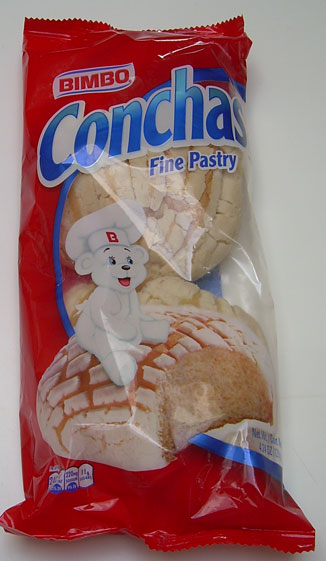
Bimbo Conchas


After living on the shores of America for several months, I must say that I flirted with the notion of changing this blog to "international snack reviews". I pondered that possibility for more than one reason. First of all, I wasn't sure of my ability to consistently access Japanese snacks and I was sure of my ability to get my hands on a plethora of food from other countries (especially Mexico at this point). Also, I want to branch out and try different things, especially after quite a few years of focusing on all things Japanese. However, my heart is still very much with Japan and Japanese snacks so I hope that my readers will tolerate my detours to other types of food on occasion while still accepting this blog as "Japanese Snack Reviews".

All of that being said, it was definitely experiences in Japan that brought me to this particular item. Well, there is that and the fact that the product's name smacks of being a euphemism for a harlot's hooters.  I was at a convenience store on San Juan Island and I saw something called "conchas" being sold there which looked a great deal like Japanese melon pan. Since a lot of Japanese baking culture has been influenced by Portugal (and other European countries), I wondered if melon pan was a riff on conchas. I didn't buy the pink-topped monstrosity I saw there, but I found a less scary version with a funnier name later.

For those who don't know, "melon pan" does not taste like melon, but rather is designed to resemble it. It is a bread-like bun covered with a cookie-like outer layer that is poured over the bread dough. The top is then scored to make it look like the rind of a melon. Conchas, similarly, is a bun with a different sort of dough that is scored to look like a conch shell. I've read several recipes for conchas and they seem to be very much the same except that there is division on the side of the Mexican sweet bread about whether or not the shell should be soft or crispy. Some insist it should be soft and others say crispy. Note that, in Japan, melon pan comes with both soft and crispy tops.


I bought this packaged conchas with the slutty maker name at Target, but the Bimbo brand is available at many different places in California as well as in markets in Spain. My sister-in-law, rather coincidentally, took a picture of Bimbo brand bread in Madrid. It cost $1.38 (111 yen) for two buns. Each bun is 240 calories and a decent size for breakfast or a snack. The second ingredient is egg and the first is flour. The third is high fructose corn syrup so beware those who fear it.

Packaged bread products are never the greatest, especially those that are designed for somewhat long shelf life, but this really wasn't too bad. The coating on top is a little moist and slightly sweet with a nice hint of cinnamon. This may help keep the bread from drying out too much. It has an interesting "doughy" flavor which resembles ever so slightly under-cooked bread. It's an interesting and certainly not unpleasant quality.

Conchas from a Mexican bakery, or melon pan. Po-tay-to, po-tah-to.

In terms of how closely this resembles Japanese melon pan, it's actually a very similar concept with a different execution. Mainly, the flavor and consistency of the topping is different. The underlying bread is almost dead the same. That being said, I went to a Mexican bakery and bought a conchas there and it was dead-on the same as melon pan with a crispy sugar-crusted top. It wasn't exactly the same as a Japanese melon pan, but it was so close as to not be terribly different. I'm sure that conchas is the well from which melon pan sprung.

As for the Bimbo brand Conchas, it's an okay packaged pastry, but hardly the "fine pastry" that it claims to be. If I were looking for a relatively mild sweet to have with coffee and had nothing more attractive, and by that I mean homemade or freshly baked, I would consider it. Chances are, however, that I wouldn't buy this again. It's not that it's really all that bad. It simply isn't all that good and I'm surrounded by more attractive similarly priced options.


Monday, June 18, 2012

D-Plus Koshi Anpan


"D-Plus" is not a grade, though by the end of this review, we'll see if there is a double-meaning to this product's maker's name. It stands for "day plus" which could mean a great many things or nothing at all. I'm told that using English names for products is just to make them seem cooler somehow. I think that it refers to the fact that these are "long life bread" products that last more than a day. I'm not sure, but I think this one was issued on May 25, and I bought it on June 11, so, that's quite a "plus" if my assumptions are correct. The company's web site says that these are designed to last up to 60 days, so this is about the middle-aged period of this bun's life.

This is my first experience with this particular manufacturer of Japanese snacks and that is due to the fact that, as I mentioned in my post on Japanese bakeries, I rarely ate anpan (sweet bean jam buns) because I was never a fan of the hamburger-bun-like casings. The thing that changed all of that was having been away from Japan for 3 months and finding myself a bit on the "starved" side when it comes to anything with anko (sweet bean jam). I found this at "Daiso Japan" in Mountain View, California and snapped it up in a fit of snack purchasing. For those who don't know, "Daiso" is a chain of 100-yen shops in Japan that has a few branches elsewhere. That place is essentially a transplant of the Japanese shops and even carried the same types of visors that I bought in Japan for pretty much the same price.

Since everything in the Daiso Japan store is a $1.50 (120 yen), that's what I paid for this and it was pretty gratifying to be paying almost the same amount for this here as I would if I had picked it up in Tokyo. My experiences so far have shown that that is rare. Usually, things are at least 50% more expensive, if not double the price of those in Tokyo.

The company that makes these is located in Gunma prefecture and has only been doing business since 2003. They take pride in using natural yeast germinated in brown rice and talk about how it produces lactobacillus cultures, though they also mention that the cultures are killed when the bread is baked so I'm not sure why they bother to mention it. It's like they're trying to add an aura of healthfulness to their products.


I've had many experiences with packaged bread products and knew this wasn't going to be the greatest thing on earth. That's okay. Not everything I eat has to be the best of the best. In this case, I was really just looking at the experience of having anpan without tracking down a specialty bakery in the Bay Area. Also, for the price, one has to set ones expectations at the right place.

One interesting thing about buying things in America is that I don't have to translate the ingredients or nutrition information. I've read kanji for years that say "fruit sugar" on them and have wondered if that was the way the Japanese say "high fructose corn syrup", but I know it could also be "grape sugar", which is a less nutritionally suspect substance. In the case of this cake, it is the dreaded HFCS. However, I'm not really the sort who gets worked up about that because I don't eat much processed food and don't drink sodas with sugar. I figure that I'm not in much danger with what little I do eat, but those who feel it is the devil's liquid refreshment may want to steer clear of anything in Japan saying "fruit sugar". One other odd thing about the translation is that it says the bun has 260 calories in the English information, but 288 in the Japanese information. It seems that 28 calories were lost in translation.

I tried half of the bun at room temperature straight out of the package. The bean jam is smooth, sweet, and very tasty, though it does tend to settle into a cake in the middle rather than distribute nicely throughout the bun. The bun, well, it wasn't terrible, but did taste like a day-old hamburger bun. It wasn't exactly stale, but it also wasn't exactly fresh tasting either. I ate the other half after putting it in the microwave for about 10 seconds. Sometimes, a little zap will freshen up dubious bread and I believe it did improve the overall texture a bit by softening it up. It was about 15% better with a bit of a warming.

It's hard to render a verdict on this given my spotty access to such Japanese snacks. If I was deprived of anko snacks for a long time again, I'd certainly buy this again. In Tokyo, I loved manju that offered me a soft mochi wrapper around the bean jam and had all I could want from traditional sweets shops. Here, I'm in the "beggars can't be choosers" position. The bottom line is that I might buy this again, but only out of nostalgia for the taste of bean jam, but if I can find ready access to a better source, I wouldn't buy this again. It's not that it's so bad, but simply that the bread is not very good.


Friday, June 15, 2012

Variety Friday: Japanese bakeries


During my many years in Japan, I would often happen across something from America that I had not seen regularly or for a prolonged period of time and get excited. Things like Oreo cookies and KitKats didn't really light my fire, but on the occasion that Dr. Pepper or a Butterfinger bar popped up, I'd feel happily nostalgic. This sort of gleeful return to the thrilling days of yesteryear diminished as the years went by as I forgot what I missed back home as the lights of my memory dimmed and more American food found its way into Japan. They became less novel with this increased encroachment.

Now that I'm in America, I'm finding that the exact opposite is happening. Instead of being happy about American things, I'm searching for and thrilled to find the Japanese things that I'm familiar with. Sometimes they are the same, but more often than not, they are relabeled and packaged for the American market. It is rare to find something which has Japanese writing and an English  label placed over it, much rare than things with English writing and Japanese labels were in Japan. 

The San Mateo Andersen's Bakery

One of my biggest surprises was stumbling across an Anderson's bakery in the Hillsdale shopping mall in San Mateo, California (that's right, I'm not in the San Juan islands anymore!). At first, I didn't know if it was the same chain as the ones in Tokyo that I was so familiar with, but a peak around the shop, a comparison of the logos, and an online search revealed that it was one and the same. Of course, the pastries that they offered were not the same as those in Japan for the most part, but some things were similar or the same. They both sell fruit danishes which look remarkably similar and anpan (sweet bean jam bun) as well as good quality bread. The biggest surprise to me though was that the California one sold melon pan, though they called it "Sunrise bread". since melon pan doesn't actually taste like melon, it probably helps them not mislead customers about what it tastes like.

One of our greatest pleasures of living in Tokyo was picking a day once a week or so and going to a good bakery for a fresh pastry for breakfast. At the time, I often believed I "missed" American-style pastries and would be happy to come back and enjoy the danishes, especially the cream cheese ones. When I got back, things didn't quite turn out as planned. Most of the bakeries I've experienced offer gooey decadent monsters or over-sized muffins and cakes. Most things are too sweet for me and all are too big unless they are specifically marketed as "petit". The cinnamon rolls and similar offerings tend to be tough, dense, and slathered in frosting. I've been incredibly disappointed in most of the bakeries so far and have found myself hoping to find the types of bakeries I used to frequent in Japan. I guess there is no pleasing some people.

There are, generally speaking, two categories of bakeries in Japan. Note that I separate patisserie (cake shops) from "bakeries". To me, a "bakery" makes bread-based products with some types of cake, but mainly bread, donuts, and yeast-raised-based pastries. Patisserie made those fancy cakes that you could find at Cozy Corner and expensive shops. 

One kind of bakery is a very Japanese-style one which tends to focus on shoku-pan (soft almost cake-like, essentially a Japanese take on pain de mie) white bread with a high amount of sugar and fat) offerings. They sell anpan, sandwich bread, and sometimes various types of "cream bread", but the basic bread in these pastries tends to be much like a hot dog bun in the U.S. (though rather finer in texture). They also sell various other specialties, but most things are geared heavily toward Japanese tastes for lightly sweet, fatty, soft breads. You rarely, if ever, see a whole grain bread in such bakeries.

These small bakeries are the most likely to disappoint foreign visitors because the bread is so lackluster and the sweets are neither interesting nor very sweet. In fact, I'm not sure that the majority of what such bakeries offered were baked on site. I often felt that they were getting their wares from places like Yamazaki pan, a major maker of pre-packaged baked goods in convenience stores. Some of the bread at these shops is sold wrapped in plastic, though not with any commercial labeling. It really does whiff of shelf-stable mass-produced bread which does not have its maker identified. One of the reasons that I never developed a taste for commonly available anpan was that I didn't like the hamburger-bun-style consistency of most of the breads used to encase the sweetened bean jam. Note that anpan is not the same as manju, or traditional Japanese sweets, that are made with bean jam. 

The other common type of bakery is a European-style one. These are the types of bakeries that I loved in Tokyo. It's important to remember that Japan is not a culture with a heavy baking history and most of what is sold in bakeries comes courtesy of Germany, Denmark, Portugal, and, of course, France. German- and French-style are the most popular, but the plethora of castella options shows the Portuguese influence. Well, there is that and the fact that the Japanese word for bread, "pan", is actually the Portuguese word for bread. 

There are a number of "chain" bakeries which are easy to find all over Tokyo and I'd like to comment on some of the more popular ones:

Orange croissants, on sale, at Saint Germain.

Saint Germain:

This was one of the more reliable bakery options and it offered fantastic orange croissants and incredible cream bread. They also offer some of the best basic bread I had in Japan, especially crusty varieties with a tender middle. They also have a serviceable calzone, if you rely on enjoying the dough more than the filling (which was paltry). Their donuts were pretty poor though as they often seem to have been fried in oil that had seen better days. Saint Germain prepares its baked goods in the tradition of French bakeries, though it makes a banana bread that would make your grandma weep (no matter where you are from). They also offer samples more often and in larger sizes than nearly any other bakery. If you're hungry and strapped for cash, you might want to drop by and hope to beat the middle-aged ladies who descend upon them the minute they appear.

Vie de France:

Despite the name, this is the least European of Japan's European bakeries and I can't tell you how many times I went in for a browse and walked away empty-handed. I didn't know this when I was still living in Japan, but the chain is owned by Yamazaki Pan, which explains the fact that their baked items seemed so pedestrian. This is equivalent to a bakery being run by Entenmann's in America. Early on in my years in Japan, I loved one thing they had on offer, a baked potato with mayo wrapped in a freshly baked French-style bread bun. I'm sure it was pure poison, but I loved it and sometimes bought one as my lunch. They tend to carry a lot of seasonal items including apple and green tea pastries. They also had more pastries with cream filling than any other bakery, and despite my love of such things, they rarely appealed to me. All of that being said, I also used to buy their melon pan regularly and they were the bakery that got me hooked. 

Dragone:

Dragone is a pretty small chain which seemed to constantly be opening and closing locations (and I couldn't find a web page for them). One of my husband's students once bought 5000 yen (about $60) worth of their famous mochi bread because she thought it was so awesome. She left it in her bicycle basket while she stepped into another shop and someone stole it. Because of her ringing endorsement, we went to Dragone and tried their bread, croissants, and cake. All of it was underwhelming. The main point of their bread is that it's supposed to be chewy, but we found it all too dense and not especially flavorful.

Pompadour:

Hands down, this French-style bakery had the most incredible bread in Tokyo. It is frequently located in the basement of department stores, and almost always has a long line snaking through heavily trafficked locations. You can't go wrong with anything they offer and they have a wide range of sweets and breads. They make one of the best anpan because the bread is reliably good, and the version which has both bean jam and cream is a decadent treat. Most Japanese bakeries, even the good ones, do a pretty rotten job with scones but Pompadour's are quite good.

Edy's:

Edy's is a chain of bakeries located in JR (Japan Railway) stations. Despite the fact that they seem to be pretty mass market, they are a good bakery and one of the more unique and enjoyable items is a cream-filled donut-style pastry covered with cornflakes and powdered sugar on the outside. You have to get it while it's very fresh, but if you do, it is incredible.

Kobeya:

This bakery, which is also mainly located in department stores but also has some independent shops, makes the best scones in Tokyo. One of my favorites was their cranberry orange scones. They are small, crispy on the outside and coated with coarse sugar, and delicately textured on the inside. They are so perfect that no jam, butter or other accouterments are necessary. They also make a super egg tart with a perfect crust and a rich filling that is not too sweet.

Hokuo:

Hokuo is a Scandinavian bakery and often these shops are small and near major stations. My favorites were the maple bread, which features delicately sweet but flavorful veins of maple throughout cake-like bread and a flaky roll pastry with whipped cream and chocolate coating. The latter is often stored in the refrigerator case. Hokuo also had some pretty serviceable bread and was good for sales of the end pieces in large bags as well as reduced prices at the end of the day at some shops. They also have a very nice cranberry bread.

Antendo's banana muffins.

Antendo:

I probably went into Antendo more than most bakeries because my husband was in love with their banana muffins. These muffins had a strong banana flavor and were just sweet enough. They also seemed to be made with real butter, which is relatively uncommon in Japan. Most of the time, margarine is used in baked goods. Unfortunately many of the other items at Antendo suffered from being "too bready" as my husband would say. They were short on their flavor elements (like chocolate, maple, even bean jam) and big on bread. It's not that their bread was bad, but it wasn't incredible. Pompadour could get away with that, but Antendo couldn't in our experience.

Anderson:

As I mentioned before, Anderson has bakeries not only in Japan, but also in the U.S. and Denmark (and it is a Danish-style bakery). The truth is that most of my experience with Anderson came from visiting their cafe when I was working. Occasionally, my husband and I would buy their sandwiches, which were served on French bread and had a few thin slices of ham and cheese. Their bread is quite good, but not much else that they sold lit my fire. They had some of the softest melon pan in Japan, and the best melon pan is crispy on the outside with a light coating of sugar.

In my opinion, among these major chain bakeries, the best for bread is Pompadour. For pastries, we liked Saint Germain, but also Edy's. Almost no bakery in Japan reliably does muffins well, but Antendo did quite well in general. Oddly, none of the major bakeries regularly carried amashoku and small ones rarely did so either. You had to happen upon an independent bakery that offered them. Note that most Japanese bakeries do a pretty bad job with scones (often hard, dense and rock-like) and we generally avoided them. And also, please remember that this is not an exhaustive list, but just an overview of major chains that people are more likely to find. There are plenty of good local bakeries and other chains to sample.

I used to think that the bakeries in Japan were lacking, but now I think that many were quite good. However, none of them are a catch-all for one-stop shopping. If you know where to look for the best version of whatever a shop sells though, you can enjoy some of the best baked goods in the world. 

Friday, April 6, 2012

Choco Cro Strawberry Daifuku and Tiramisu

 From the top: strawberry daifuku, tiramisu, and chocolate (the basic croissant)

If something involves a lot of fat, there is a good chance that the French are doing it quite well, and if you know that the "cro" in "Choco Cro" means croissant, you'll know why I'm invoking the French. Sometimes, it means that the Japanese can do it even better and I've been told that is the case with these pain au chocolat. Since I've never been to France, however, I'll have to take the word of other people who type about their impressions in various blogs and forums. I'm sure they're just as great authorities on this matter as the likes of me.

One thing that both the French and the Japanese have is a fearlessness when it comes to fat consumption. You can order grilled chicken skin (no chicken, just the skin) in yakitori-ya (grilled meat on sticks joints). I also learned from long experience that the candy often has a higher fat content and that is what makes it so rich and decadent compared to American chocolate.

Americans jumped on a low-fat and non-fat bandwagon at some point in the 80's and have been suffering because of it ever since. They subbed sugar and chemicals for all of the fat they cut out, and lost texture and flavor. When it comes to "Choco Cro", a chain of cafes that sells tiny little croissants stuffed with rich fillings, "fat" is definitely where it's at. From the buttery pastry to the rich, creamy fillings, these are a lipid party for your body and every fat cell is invited.

For the time being, Choco Cro is selling a special "strawberry daifuku" version. It is meant to emulate the Japanese sweet which is composed of mochi (rice cake), red beans, and a real fresh strawberry. I've had the real deal and, while it can be very good if it is super fresh, it can also be a little weird if the berries have been inside for more than a day. Strawberries don't age well in the best of circumstances. When they are surrounded by a heavy wad of sweet red bean paste, they do even less well.

If you look at the picture above, you will see there are three fillings piped into the top one. One is the "mochi", the next is chocolate, and the last is strawberry. If there is actual sweet bean paste in there, it didn't really shine through in the flavor since my husband liked this and he hates anko. Mostly, I thought it had a pleasantly strong strawberry flavor coupled with a good chocolate taste and a weird textural element from the "mochi". I didn't hate this, but I wouldn't choose to get it again.

The tiramisu (center one) incorporated a cream cheese filling along with chocolate and the most marginal hint of coffee. The cream cheese is supposed to sub for the mascarpone and I thought it was delicious, but my husband didn't care for it at all. Again, that has to do with his general lack of affinity for cream cheese.

Like all Choco Cro croissants, the pastry was flaky, light, and had the perfect combination of crispy and moist dough. It's buttery and very satisfying both in terms of the texture and taste. The fillings are very much something the taster will respond to subjectively and I loved the tiramisu and my husband enjoyed the strawberry daifuku. Of course, we both remain great fans of the classic chocolate "choco cro". If you're in Japan and have a chance, a visit to "Choco Cro" is a must. You will not be disappointed, even with the smallish portions at slightly high prices (about 250-300 yen per or around $3 each). The only thing I'd recommend for non-smokers is to get one "to go" because they have the most pathetic partition between smoking and non-smoking that I have ever experienced.


Monday, December 19, 2011

Muji Amashoku


When you think movie snacks, you're probably thinking popcorn, M & M's, chocolate-covered raisins, or some sort of candy that can be shoveled into your mouth in small bits such as to mislead you about the true amount you are consuming. You probably aren't thinking "Japanese baked goods", but this amashoku (sweet bun) was purchased for me to consume during a viewing of Mission Impossible IV: Ghost Protocol. 

I didn't plan to be so unconventional, but the theater we went to was fused with Muji (in what I'm sure was a painful transporter accident). If you don't want to look that up and don't know what it is, I'll tell you it is a worldwide seller of household goods, clothing, and other assorted crap that emphasizes minimalism. It's the "no brand" brand. The fact that it is considered "cool" always makes me smirk since I grew up poor and buying "generics" which were what no one wanted because of their plain black on white labels. If only they'd chosen a different color scheme (Muji's is black text on tan with deep red lines), they might have been painfully hip instead of fodder for people who knew the humiliation of shopping with food stamps.

Since Muji had a shop in the basement and first floor of the theater, we killed time before the main feature by perusing one of the shops. There is a minimum of 20 minutes of advertising and coming attractions and we were lied to about the starting time and subjected to 13 minutes of ads even though we waited until near the starting time. At any rate, since Japanese theaters allow you to bring in your own snacks (hurrah!), I was drawn to the compact packet of amashoku for a mere 126 yen. Each small bun is a little bigger in diameter than a 500 yen coin/American half dollar and a mere 27 calories. 

All amashoku is a little on the dry side, but not in a way which is especially unpleasant. It has a textural quality which crosses between bread, a cookie, and cake. It has the texture of the top of a muffin, the dryness of bread, and a bit of the delicate inner texture of cake. Really fresh amashoku that you buy in bakeries has a slightly crispy top. Pre-packaged types like this are pretty much soft all the way through, but that doesn't make them bad.

The flavor is of margarine, sugar and something that reminds me of anise at the end. It's a very distinctive flavor which I encounter with all sorts of amashoku, but I can't find anything in on-line recipes which would account for this taste. The basics are flour, butter, sugar, and egg. These were sweeter than some amashoku, but not too sweet and quite tasty. For a texture junky like me, they really hit the spot. 

Since Muji is worldwide, there's a chance that these can be bought in other countries at their shops. I was already a fan of amashoku, but they are on the "plain" side. If you're someone who likes carbs that aren't too oily or painfully sweet, I'd recommend giving them a try. I'll certainly have them again.


Friday, November 11, 2011

Yamazakipan Kabocha Danish


Mirror, mirror, on the wall, which is the loveliest squash of all? Is it American pumpkin, as it is rolled into pies, danishes, donuts and anything which wears cinnamon, nutmeg and ginger like a scrawny high fashion model wears a ridiculous outfit? Is it Japanese pumpkin, which pairs so well with soy sauce and mirin and studs any dish it appears in with creamy delight? The truth is that both are the ugly stepsisters to the Cinderella that is butternut squash, but nobody makes that comparison. Recently, I paid around $3.50 (280 yen) for half of a tiny butternut in a Japanese market and found that it is sweeter and has more depth than either of these traditional squash rivals. Butternut gets the glass slipper, but it's too expensive to squire to the ball on a frequent basis. I guess I'll be doing the waltz with the green-skinned stepsister.

That is not to say that Japanese pumpkin isn't worthwhile, but rather that if we're going to play a game of my gourd is better than your gourd, then we should include a full range of contestants, not just the big orange jack-o-lantern fodder and rough-skinned Japanese greenies. I love Japanese pumpkin, but in order for it to shine in a food though, there has to be enough of it to actually taste. This is a fact that seemed a bit lost on the folks at Yamazakipan. 


Unfortunately, before I purchased this packaged baked item at Lawson 100 for, obviously 100 yen ($1.23), I didn't know that "danish" meant "bread" and that a small smattering was all that was required to qualify this as "kabocha". I was captivated by the notion of enjoying those black sesame seeds with Japanese pumpkin and hoped for the best. I'm dumb like that. The bread in this "danish" is best described as "nouveau hotdog bun". The filling, when you happen upon more than a tiny, tiny portion, tastes fine, though rather thin on the pumpkin side. I get the feeling it is mixed with liberal amounts of water or some other filler to stretch it further.

Yamazakipan makes some pretty nice packaged treats, especially things with whipped cream filling, but this was a huge disappointment. I didn't exactly want baker-quality pastry, but I also hoped for something more than this. I could have lived with the lackluster bread if there had been more filling, or lived with less filling if the bread had been good, but Yamazakipan didn't give me anything at all to work with.


Friday, October 21, 2011

Antonelli Cocoa Cream Italian Croissant


There's a multi-lingual message on the back of this package which says: "The pictures shown are pictures of a fantasy that does not represent the contents of the package itself." You have to respect that they put some truth on the package, even though I missed this message when I first purchased this and expected something a little closer to what was pictured. Absolute truth in advertising would require that this not be called a "croissant", though it is genuinely Italian.

Though these have Japanese writing on them, they are made in Italy. Though I tend to favor reviewing items actually produced in Japan, sometimes it's hard to resist an odd offering from another origin. I found these at Okashi no Marche discount snack shop for a mere 100 yen ($1.30) for a 1.76 oz./50 gram serving. If these are even halfway decent, that's a pretty good price. You can get 100 yen pastries in Japan, but most of them don't have a shelf life of about 7 months. This has an expiration date of May 26, 2012.


The "croissant" portion is really a sort of cake-like bread. It's like a slightly buttery hotdog bun. When I opened the package, I got a whiff of something vaguely familiar and the flavor also had an essence of something I'd had before. I realized that it was the same scent and taste that I'd had with some lemon chocolates a student brought me back from Italy some time ago. I thought that it was a part of the flavoring in those candies, but now I think it might be something else. It's not a bad thing, but it is very distinct.


The bread is soft, but still seems a bit dry. This is common in bread products that are prepared for long-term preservation. It tastes slightly sweet and a little rich. This is likely from the high amount of egg in it. The cocoa cream filling is dotted through it and doesn't have a very strong chocolate flavor. Mainly, it adds a fatty dollop of texture and extra sweetness. There were also lemon and strawberry versions available, and my husband sampled both of them and found them reasonably good, though not amazing.

I try to accept products for what they are rather than what I might hope them to be. These are extended shelf-life (ESL) baked goods and it's unfair to expect them to be like a fine quality fresh-baked pastry. For something which you can put in an earthquake survival kit, toss into a backpack, or just keep in a cabinet or desk drawer for just that time when you just want a bread-based breakfast but don't want to feel pressure to eat it at any given time, this is actually pretty good. The bread has a nice flavor by itself, the filling has a decent texture (though there could be more of it), and it's only about 200 calories for a good-sized bun. It's kind of a good "bad" food. And, yes, I'd buy it again.


Tuesday, July 26, 2011

Plecia Great Mont Blanc


All things mont blanc draw me to them. The Pied Piper would have nothing to offer me, but the Hamlin baker could lead me to my doom with a lovely mont blanc. Something which resembles a small mont blanc pizza with only 318 calories, scarcely more than a real pizza of the same size (14 cm. in diameter). Of course, I'm not sure if this is a "proper" mont blanc, because it doesn't have mountains of piped chestnut paste lying on top of it. However, according to Wikipedia, it just means that there is pureed sweetened chestnuts and whipped cream, so even this flat version should qualify.

I found this for 275 yen at Inageya supermarket while my husband was inspecting the beer options. There's a section next to the butter which offers "fresh" (as in not designed to have a long shelf life) sweets which often lures me to it with its wiles but rarely pries my hard-earned yen out of my wallet. The problem is partially the cost, but also the calories. Most of the treats are fatty delights, filled with rich pudding, whipped cream, and small amounts of cake. Also, frankly, there are a lot of cake shops around Tokyo which offer fresher, prettier options with less environmentally wasteful packaging.


This is a simple thin layer of yellow cake smoothly covered with a whipped cream base and with some ribbons of chestnut cream on them. I didn't expect too much, really, but I was incredibly impressed in the end. It's not too sweet, has a much better chestnut flavor than I expected based on the chestnut to cream ratio, and had a serviceable sponge cake at the bottom. I found it incredibly delicious, and ate the whole thing at once when I'd originally planned to just eat half of it.

This is my second product from Plecia, which specializes in these types of refrigerated cakes and sweets. They draw me because they have tasty lower calorie treats with a lot of whipped cream, and that is something I find hard to resist.


Tuesday, July 19, 2011

Random Picture #71

Click to see a bigger picture.

One of the interesting things about being given lots of food gifts in Japan is that the choices made often reflect the tastes and preferences of the person giving you the gift and allow you to sample things you'd never buy for yourself. A few weeks ago, one of my very kind students gave me a big bag of bread products that she bought at a local bakery called Edy's. I have bought things there on occasion, but I tend to favor Good Morning bakery and another place called Saint Germaine (both are chains). Ostensibly, she bought this for me as a "thank you" for being kind enough to give her a cup of tea during each lesson. Yes, I've given her 8 or so cups of tea and she's given me a huge bag of bread, a package of pies, a package of chocolates, and a bowl of a Japanese rice dish that she personally made. That sounds like a fair trade. Seriously, she's just generous and sweet, but that is what her stated reason was.

Sweet butter stuffed roll. 

The assortment she gave me is pictured above. From left and clockwise is a roll stuffed with raisins and whipped margarine, sandwich bread, a paper-wrapped roll (much like the raisin one) stuffed with sweet whipped margarine and sesame croissants. All of these were delightful and I can truthfully say I'd never have chosen these of my own accord. In particular, the paper-wrapped bread was decadent and delicious in a way I never would have expected from something full of nothing more than what looks like whipped butter. The lesson here is to try new things outside of your usual tastes, or at least to have really nice ladies who give you stuff all of the time in your life.

Thursday, June 30, 2011

Yamazaki Lemonack


I've mentioned before that I took on a part-time job because of post-quake income loss. This has had many benefits for me and a few drawbacks. The main drawback is that blogging time has been dramatically slashed and I now struggle to keep up (and may yet have to reduce posting frequency, but I'm hoping not to). The benefits, beyond more cash, are that I'm meeting a whole new crop of people and learning ever more about Japan and the Japanese people and that I have regular access to areas I wouldn't normally go to. To that end, there's a convenience store (konbini) chain that is not in my area but is at one of my new workplaces. It's called "Daily Yamazaki". Note that going to a shop is infinitely better than hanging around one of my new workplaces since it is located in a huge old building in a very seedy area that houses a giant pachinko parlor, a karaoke bar, and several other establishments catering to less than elegant appetites. However, the job itself is great and the workplace very nice except for the air conditioning settings which are designed for reptilian metabolisms.

One might think that a "konbini" is a konbini is a konbini, but that is not so. The Daily Yamazaki chain is ran by the same people who make Yamazaki Pan products. That means they get to gobble up more shelf space in their own convenience stores. These are things which I'm not likely to find anywhere else and that's how I ran across this "Lemonack". I was killing time before work (as I'm compulsive and always arrive early) and checking out their stock. I picked this up purely based on name and the fact that it was made with lemon as I didn't have copious amounts of time and didn't investigate the ingredients list. The front of the package is utterly devoid of clues as to what is inside, but at a mere 68 yen (85 cents) for something about half the size of my palm, I wasn't really making a big investment anyway.


It turned out that this is a little lemon cake with lemon coating. This must be a seasonal thing right now because local bakeries have been offering very similar things as of late and this is not too dissimilar  from the Fujipan lemon cake that I reviewed previously. Well, it is a lot smaller, less sweet and less moist, but the general shape and concept are the same. The cake is slightly dry, which isn't surprising considering it has to sit around for about a week in the store. Most of the flavor is coming from the sweet lemony coating, as is a very nice aroma. While the yellow cake doesn't add much taste, it also doesn't really detract.

This is a hard one to rate because I definitely enjoyed eating it, but couldn't help but think that I'd only buy it again under specific circumstances. I'd have to have coffee or tea to have with it to offset the dryness, desire a baked good, and want a small portion to ensure that I wouldn't eat too much. Since I'm generally pretty good at limiting portions without external enforcement, the latter isn't a strong issue for me, but may be for others. I'd also probably have to be looking for something economical rather than a more expensive bakery option because there are bakeries in the vicinity as well. That being said, I think this warrants a favorable rating overall, but I wouldn't be jonesing for another... though I'd buy a whole case if Yamazaki Pan would explain the naming and why this is called a "nack".

Just a gentle reminder that there is a contest running for two weeks to win a few snack and snack-related goodies. If you'd like to enter, the details are in this post.

Friday, June 17, 2011

Mister Donut Orange Madeleine Donut


As of this post, I realize I've been talking a lot about donuts as of late. I assure you that I have not turned into a Homer-Simpsonesque donut-eating fiend. It is mere coincidence... or at least I think it is. Perhaps spring is a time when an older woman's fancy turns to donuts, or there have just been a lot of opportunities to sample new and interesting things. This post was motivated by the fact that Mister Donut has come out with a line of donuts which tout, among other things, the inclusion of vegetables and fruit.

Click to see a larger size. Image captured from Mister Donut's web site.  

This particular type of donut does not have any vegetables in it as I was too chicken to try those ones. In the U.S., I'd have some confidence that the veggies would be well-hidden under thick layers of sugar, flour, fat, and more palatable flavors. In Japan, where the cheese danishes are made with sweetened Gouda and cheddar, I fear that a donut made with chocolate and gobo (burdock) will actually taste like burdock. The same goes for the sweet potato and spinach one, which is incredibly green and probably appeals only to someone with Popeyesque levels of enthusiasm for spinach.


This donut is not actually a donut. Even on the Mister Donut web site, they liken it to a madeleine. It's really close to pound cake. It's sweet, heavy, and moist with subtle orange flavors except where there are little bits of sweetened orange embedded in it. It's a truly delicious bit of cake and well worth the 157 yen ($1.95) and 241 calories. Frankly, it does inspire me to try some of the "riskier" flavors, though I'm much more likely to go for the pumpkin one if I'm to try a vegetable-based one.

These were released at the end of May and I'm not sure how long they'll be on offer. These types tend to peter out in 2-3 months so strike while the iron is hot if they interest you. This particular variety is definitely worth your attention.

Friday, June 10, 2011

Fujipan Lemon Cake


 "Born from an exhausting research of fine tastes. We provide a first-class taste brought directly from the earth." This is what Fujipan has written in elegant script on the front of the package of the lemon cake I'm about to review. I think that means these are baked by Morlocks, or the mole people. Either way, I'm inspecting it carefully before I take a bite to make sure there aren't any Eloi baked inside.

I found this cake in Seiyu supermarket's giant ass pile of baked goods. It looks like a yard sale of consumer-grade pastries after it has been liberally picked over and fondled by retirees and housewives who would rather fondle the baked goods than attend to their irate children. It was next to a lemon melon pan, and this won the contest for which one I'd buy because I knew my husband would split this large cake (about the size of two Hostess cupcakes) with me but not the melon pan. It cost a mere 100 yen ($1.21).

The cake has a lemon glaze on the outside and is split open ostensibly to pipe lemon cream into the center. While the glaze covers all of the top, the lemon cream is extremely sparse. In fact, there was probably a smidge (that's a technical term equivalent to about half a teaspoon) in my half. This is unfortunate because the cream is delicious with a strong zesty lemon flavor and a creamy richness. The rest of the cake is mainly skating by on two things, the texture and glaze.The cake iss moist, tender and slightly dense. The glaze is very lightly sweet and only cares a hint of lemon.

At about 340 calories, the whole cake is a bit of a calorie bomb, but if you can manage to muster up the self-control to only eat half, it makes a very nice treat for tea time or dessert. The texture is exceptional for a packaged cake and, while I could have done with more lemon in the glaze and definitely more of the lemon cream filling, I'm satisfied with the taste and sweetness level as well. I could definitely see buying this again.

Thursday, February 10, 2011

Pasco Stick Melon Choco


I read the results of a study recently which said that putting calorie information on menus didn't have any impact on purchasing decisions. I think that's a big, fat lie. Personally, seeing calorie information actually encourages me to buy certain things. I've taken to inspecting the calorie counts on interesting looking breakfast foods, and anything which is a reasonable portion size and under 100 calories is likely to go into my basket.

These "stick melon choco" (chocolate chip "melon" bread) are 99 calories each, and the perfect size to have two for breakfast or one at tea time. There are 5 in the bag and it only cost 99 yen ($1.22) at Seiyu supermarket. I like melon pan when it's good, because the contrast between the crispy cookie exterior shell and soft, fluffy white-bread-like exterior can be sublime. The main problem is that store-bought melon pan usually is soft, but I was lured into buying this because there was something on the front that said I could make them crispy again by putting them in the toaster oven. I'm dumb like that.

It squishes easily when you cut it.

The flavor is heavily influenced by margarine and white flour. Despite the fact that there are a few chocolate chips and what looks like layers of chocolate, that component is very subdued. The sweetness is also on the light side except when you catch some of the granulated sugar sprinkled on the top on your tongue.

Even wrapped in foil for toaster oven heating, the bottom burned slightly around the edges. Without foil, it turned to a black crispy horror. The packaging should have warned me that I shouldn't put it directly in the oven, but instead just said, "use the toaster oven and it'll be crispy"! Thanks for nothing, Pasco! I charbroiled one in the oven to learn this lesson.

The texture varies widely depending on how it is prepared. Straight out of the bag, it's slightly doughy and a lot like standard white bread. Heated in the toaster oven in foil, the bottom gets a little crispy. Warmed in the microwave, it becomes doughier and quite soft. The flavor of the chocolate came out the best when heated in the microwave, but the texture was best when done in foil in the toaster oven.

There were fine, but I was disappointed that the chocolate aspect wasn't stronger. I liked them well enough, but perhaps not enough to have them again. Chances are that I will opt to sample something else rather than re-visit these. It's not that they're bad in any way, but rather that they're not special enough to become anything resembling a "favorite".

Wednesday, March 31, 2010

Kashiwado Jumbo Black Sugar Bread


Most of my snack shopping takes place in relatively predictable places like convenience stores, supermarkets or snack shops. Very occasionally, something interesting will show up in one of the local green grocer's catch-all bin of snacks and low price foods near their registers. The shop these were purchased at is a bit grungy, but the prices for vegetables, fruit, and meat are low. The snack foods in the big bin are often a jumble, and sometimes look worse for wear. The boxes can actually look beat up, scratched, or worn on some foods; it's like someone kept them in the back of their cupboard for a few months then decided to sell them.


Normally, I ignore the snacks at this green grocer, but my husband plucked this bag of brown sugar bread out of the bin while he was foraging for Portuguese strawberry cookies that they had recently started carrying. The shop I bought this from is called Takano and we paid 198 yen ($2.20) for a package with 10. Each is 20 grams (.7 oz.) and 7.5 cm. x 5.5 cm. (3 in. x 1.2 in.) in size. I'm not sure if you can call that size "jumbo" or not, but they are big for a cookie-like treat in Japan.


Though these are called "bread", this is one of those times when translation doesn't work very well. These are more like a cross between a bread and a cookie. They are a variation on the classic Japanese "tamago pan" (egg bread). That means they are firm, dense, and have a somewhat crispy exterior with a dry, but tender interior. They are a small carbohydrate bomb, and eating them is as much about texture as taste. The ingredients include flour, brown sugar, white sugar, egg, and margarine.

These smell of molasses and brown sugar and unsurprisingly taste fairly strongly of brown sugar and molasses. They are quite sweet, but not in a throat-burning way. Like other types of tamago pan, they have a slightly crispy exterior, and a dry, cookie-like interior. They are very satisfying with a cup of coffee or tea as a more substantial snack.

I liked these a lot, but I love the sort of dense, dry cookie-like interior these have. They remind me of the sugar cookies my mother used to make, which were not your usual crispy, sweet sugar cookie. I find the texture of tamago pan immensely satisfying. The flavor of these is icing on the cake. I can recommend them without reservation to people who like similar types of food, but I'm not sure they'd be a knock-out winner with just anyone.

Wednesday, May 20, 2009

Twin Dome Vanilla Cream Cake (Japan's Twinkie)


Imagine finding a Twinkie that had a sponge cake that was fresher and softer. Further, imagine the cream filling is actually made with whipped cream and milk rather than vegetable shortening. If you can wrap your head around such a fantasy notion, then you can imagine what the Twin Dome cake by Fujipan is like. This cake is the closest Japan has ever come to the Twinkie in my experience.


You can pick up a package with two cakes for about 100 yen (about a dollar) at some convenience stores. The cakes are 202 calories each and each is about 8 cm (3.1 inches) in diameter at the widest point along the base. Note that a Twinkie, which is the closest comparison, has only 150 calories for 1.5 oz. of cake and cream filling. I'd say that the Twin Domes are about the same total volume as a Twinkie, but the higher calorie count is the price you pay for the real cream filling with its higher fat content.


Each cake is blessed with a generous dollop of very soft and smooth whipped cream in the center. The cream is lightly sweet and the cake tastes like good, fake vanilla and is sweeter than the filling. The cake is a soft, fresh sponge. It's not really dry, but also not really moist. It's an excellent combination of textures and mild flavors. It's a little more on the sweet side than usual for Japanese cakes, but not cloyingly so.

I recommend sampling these with no reservations. This is one of the best snack cakes I've ever had, and even my fussy husband likes them. The only thing is that I'd recommend buying one only if you have someone to split it with so you don't end up gobbling down 400 calories of delicious cream-filled cake in one sitting.