Showing posts with label daifuku. Show all posts

Friday, August 18, 2017

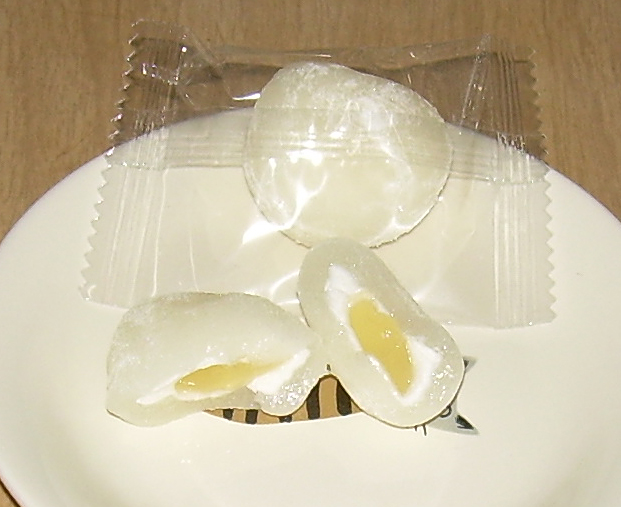
Yoneya Lemon Daifuku


As I've mentioned before, I am currently living in a rural area. For the most part, I love it here. Though the local politics don't match my values at all, I'm accustomed to living in a culture with values that aren't in accord with mine. In fact, I feel like living in Japan helped prepare me for being a liberal in a conservative zone. I can accept the culture (which is beyond politics, but that's the biggest "hardship") as something which suits the locals, but doesn't suit me personally and just keep my distance.

At any rate, the biggest aspect of small town life that actually does bother me is the food culture, such as it is. There are about 10 restaurants that aren't chains or fast food places, and most of them offer a limited menu with an emphasis on burgers and sandwiches. I don't like to order anything at a restaurant that I can't make myself at least as well, if not better, than a restaurant can. I rely on Yelp to some extent to make some decisions about which places to try, and, though I've lived here for almost two years, I've not hit all of the places yet because I tend to spend my money at ethnic places about an hour north of where I live (in Oregon, in a city which is big enough to have a wider range of options).

What Yelp has made me realize is just how much ones tastes are conditioned by local experience. People raved about a local steak place and it got high star reviews. My husband and I finally went there on his birthday about a year after living here and both found it extremely disappointing. The "salad bar" was a limited range of canned food options. The chicken I ate was some sort of pressed meat with grill marks. The "dessert" was a scoop of cheap ice cream with Hershey's syrup on it. This helped me see all too clearly that people who haven't had a broad range of experiences can't tell the difference between what is at the low end of the culinary scale and what is at the high end.

As someone who reviews snack foods from another country, I realize that that people may judge the food I'm judging less harshly than I do because some of them haven't lived in a place in which better options exist. And, I'm sure there are sometimes things I review which other people have more experience with that other people would find inadequate, but I really enjoyed. This snack really illustrates to me how spoiled I was to have lived in a place in which fresh confections made with mochi were common. I think someone else might have found this more enjoyable than me, but only if he/she had never had a better version.

This is made by a company called Yoneya which specializes in traditional Japanese confections like yokan (a block of sweet bean gel). They seem to offer a lot of summer gift boxes as well as individually wrapped sweets like the one I'm reviewing. One of their less traditional, but quite interesting looking foods is a peanut monaka. It's actually shaped like a peanut, comes in a peanut-shaped box, but is oddly filled with red bean jam (anko) and not peanut-based filling. Oh well, two out of three ain't bad...


The mochi shell on this wasn't hard, but it also wasn't super soft and pliable. It seemed too thick and, though it was easy to bite into, it was weirdly firm in a way most fresh (non-shelf-stable) mochi is not. That said, the lemon filling in this was nothing short of amazing. It was tangy, sweet, and bright. The flavors were so good that I very much wanted the textures to match and I decided to give it a turn in the microwave to see if warming up the mochi would make the texture more stretchy and pliable, but it didn't change anything. It seemed too thick and overworked/dense. It was very unfortunate that the mochi outside didn't match the lemony bean filling inside.

If you want to try this, and I guessing you don't, I'm afraid you're out of luck as the only place you could have gotten one was from Bokksu and they seem to no longer carry them.

Source: Part of the Bokksu premium summer citrus box


Wednesday, December 25, 2013

Random Picture #194


Merry Christmas to my readers. I hope you're all enjoying your holiday.

If you were in Japan, you could be leaving Santa a little treat. He wouldn't eat it, of course, but he'd feed it to his reindeer - at least that's what the illustration on the bag seems to be telling us. These are "choco daifuku" or chocolate-filled rice cake. These shelf-stable versions of daifuku tend to be a little disappointing, especially if they are designed for kids. The rice cake can sometimes be a bit touch or stale, so, despite the adorable holiday-themed packaging, I didn't opt to buy such a large amount for reviewing. I had other plans for my holiday nosh, as you'll see by Friday's review. ;-)


Friday, September 6, 2013

Yuki & Love Japanese Style Sesame Mochi


My experiences with "Yuki & Love" brand mochi snacks has been a very mixed bag. In fact, I started off flying high on their blobs of goo-filled rice cake with their taro mochi. It was all a thundering downhill ride from there. They even ruined peanut butter mochi for me. It was like one of those friendships that start out great and, not so slowly, you find yourself bored and then repulsed by the idea of spending time with a person. In the end, you're putting them off when they ask you to spend time with them because you're dreading the experience.

The truth is that I was treating this box of sesame mochi like such a bad friendship. It has been in my possession for five months and is currently past its expiration date of June 2013 by a fair margin. I feel obliged to say that because, clearly, I'm not having this at its best.

In fact, I may not even be having it when it is safe to eat. However, my feeling is that these packages are sealed pretty well and there are little oxygen absorbing packets in them. If I don't go blind or projectile vomit, then it probably is okay to eat. Mind you, I would only do this with a sealed product. If it had been open for five months, I wouldn't be eating it now. Suffice it to say, this is not a "do as I do" sort of thing. I don't recommend anyone eat expired mochi. Don't try this at home, kids!

Fortunately, there were no infestations of insects in the package and I couldn't perceive visible growth on them. In fact, it looked pretty innocuous in there. My main concern was that the mochi would have gone very, very stale. That being said, the other Yuki & Love mochi snacks which I didn't care for tasted stale even when they were supposedly on the fresh side.

I'm happy to say that this was actually pretty good, especially given its status as aged mochi. In fact, the mochi texture was better than my previous two experiences. It was relatively soft and easy to chew. No, it was not like fresh, handmade stuff, but this is shelf-stable and much cheaper - not to mention the fact that I can get it at Ranch 99 Asian market any time rather than make a special trip to the nearest Japan town.

The mochi was pretty pleasant cold, and downright pliable and almost fresh when popped in the microwave for a few seconds. I tried it both cold and (too) hot and I preferred the filling cold and the mochi warm. The sesame coating on the outside added a nice nutty quality as well as the unique flavor that comes from the roasted black seeds. The interior is a little on the milder side for sesame, but still quite flavorful. It lacks intensity and richness, but is not bland.

I would absolutely buy this version of Yuki & Love's mochi again. In fact, I'd say that it is very serviceable and a good variety to keep around for emergency mochi cravings. Yes, I realize that only I actually have those... well, me and possibly pregnant Japanese women. Each little blob is 130 calories, which is not low for the size, but is pretty good for something which contains seeds (which are fatty and high calorie relatively speaking).

It seems that sometimes you avoid a "friend" because you expect to have a bad time, but then you discover that good times can be had after all. Next time, I'll try not to wait until the snack is two and a half months past its expiration date to give it a go.


Monday, June 10, 2013

Yuki & Love Japanese Style Peanut Mochi


Have you ever wondered which part of an Oreo cookie makes the cookie better? Is it the slightly bitter, not terribly sweet and crispy outer cookie or the creamy, sweet death-mush in the center. If eating habits are any indication, that is, our tendency to mush together two cookies divorced of one half of their outer cookie sandwich, then the filling is the star of the show. That being said, in Japan, they used to sell only the outer cookie sans the sugary goo. Tastes are relative, after all.

When thinking about mochi treats, one can ask the same question, though I'm figuring those that are not aficionados of Japanese traditional sweets would say, "neither". Those who are connoisseurs would likely say, "both." As someone who just buys snacks for a living, I'm definitely saying the proof is in the rice cake (mochi) and that a substandard mochi experience will make or break the experience. 


The peanut filling of this is lightly sweet, dense, and pretty fatty. The texture is rich, but it's a little kludgy, like "natural" peanut butter before it has been stirred (though not quite that bad). The mochi is where things fall apart. It's actually nicely balanced in terms of taste and lends a sweetness from the rice cake having been infused with a bit of sugar and a nuttiness due to the powder on the exterior. The place where it all goes wrong is the mochi's texture.

The first time I tried a "Yuki & Love" Japanese style mochi, I loved it. It was soft and tasty with a delicate taro (like a potato, only, not) filling. I was so excited that I was dying to try another flavor and scooped up boxes of other varieties when I found them on sale. The second time was a more so-so experience, but that was largely due to the weirdness of the brown sugar flavor in that one. This time, the mochi was just crummy. It was too thick and rubbery, like chewy on the eraser on the end of a number 2 pencil. I don't know if this was old or if they just did a bad job on this particular one, but it really ruined the experience. Despite being quite good with the flavor (and being an enormous fan of all things peanut butter), I didn't finish the box. I kept going back and trying them, even microwaving them to soften the thick exterior, but it didn't help. I ended up throwing out half of the box because they just weren't worth the 130 calories per rubbery lump.

I hope this was a "bad batch", but I'm unlikely to try this variety again. I'm not giving up on the brand and will try another, but if it doesn't get better after the next sampling, I'll be saying goodbye to "Yuki & Love", or at least their Japanese style mochi offerings.


Thursday, May 16, 2013

Lawson Anko Cream Daifuku

Image from Lawson's web site.

There were certain things in Japan that I wouldn't touch with a 10-foot pole when I first got there. This is one of those types of things. Now, if I had a 5,133-foot pole, I'd use it to get my hands on one of these babies. For a mere 150 yen and weighing in at only 191 calories, you can enjoy this "Uchi Cafe" treat at limited Lawson convenience stores. It was available from May 7, 2013, so it should be around for a wee bit, but don't count on seeing it for terribly long. These things tend to have a short lifespan as they are marketed at the fickle affections of young women who value novelty.

The outside is soft mochi and is filled with sweet bean paste that has a whipped cream center. The package comes with "black honey" sauce, or "kuromitsu" and it's sprinkled with kinako (toasted soybean flour). I'm sure that it doesn't come with an elegant little dish or wooden stick, but I'm sure you can transfer it from it's plastic package to a more fitting serving situation. This is part of the "premium sweets" line, which focuses on incorporating cream into the treats.

This is one of those treats that would hit every mark with me - mochi, whipped cream, kinako, and anko, though I would probably skip the kuromitsu.

Monday, January 14, 2013

Tochinomi Daifuku (chestnut and red bean)


People have been telling me about various "Japan Towns" since I returned to the U.S. I'm not sure what I expected when I heard about such areas, but it really was not what I experienced. I guess that I expect "Japan Town" to feel like, well, Japan. That doesn't mean I expect that Japanese people will be milling about, staring at their phones like zombies and gawking at the white girl with piles of red-blonde hair. The truth is that, I am not sure what was missing, but I think that the atmosphere created by the crowds, cramped spaces, the frenetic activity of employees trying to look like they're performing their tasks perfectly, the constant cleaning and tidying, and the conversations in Japanese.

I've been to two "Japan Towns" since coming back home. The first was in San Jose, and I had the misfortune to go there on a Monday when, apparently, it is mainly shut down. This was a big disappointment because one of the reasons I went there was to visit their traditional sweets shop, Shuei-do. I'm not sure, but they appear to have vanished from the Japan Town web site and may have gone out of business. All I know is that the Japan Town in San Jose was so tiny that I haven't been motivated to go back on another day.

The other Japan Town that I went to recently was in San Francisco, and it has more to offer, but is still largely just a shopping arcade plus a few other shops located near the Peace Pagoda. It is definitely more interesting than the San Jose equivalent, but not as much as I'd hoped. I think I simply expect too much. As an oasis of "Japan-ness" in the U.S., it's actually pretty good. There are a lot of Japanese restaurants, several Japanese stores including a bigger, nicer Daiso than the one I frequent, a gaming arcade, and some sweets and grocery stores. However, it's all pretty streamlined. You don't get much of a real ethnic feel from it. There aren't little grubby mom and pop shops for the most part (as I hear you may experience in China Town). Of course, the Japanese aren't exactly known for doing "grubby". 

The best part for me was Benkyodo, a place selling hand-made Japanese sweets, and Nippon-ya. Nippon-ya is where I procured today's snack for review. The latter offers boxed sweets which are pretty much the same as those sold in train stations, the airport, and souvenir shops around Tokyo. It is the sort of thing I thought I'd never encounter after leaving Japan. I was a kid in a Japanese candy store when I say stacks of gift-wrapped boxes of sweets topped by the usual plastic display of samples with cutaways to show you what was inside.


There were so many options and I wanted to buy them all, but I can't really justify doing so when I am the only one who is likely to consume the contents. The prices were in the $9-$10 range for boxes with 16-24 pieces. This is incredibly reasonable and in line with the average prices in Japan. Most of the time, these cost about 1000 yen ($11.21) per box in Japan, often more than that. Someone on Yelp said that they felt these were "expensive", and they may appear to be so by U.S. standards, but I was more than happy to fork over $9.25 for a box of 20 small daifuku.


I agonized about what flavor to buy since there were many that looked appealing, but ultimately went for chestnut since it is one of my seasonal favorite. I figure the fruit flavors are likely to stick around until spring or summer, and this will vanish with the cold weather. The display promised chestnut bits in red bean paste with a hint of caramel. As you can see from the cutaway above, there aren't any chestnut bits to speak of in the one that is shown here. This was the third one I ate, and I haven't found any pieces in any of them. 

The flavor balance is definitely heavy on the mochi and red bean side and there is absolutely a hint of caramel. The chestnut flavor is very subtle, and you actually have to be looking for it. Overall, the flavor profile is not intense, but tends to settle in slowly. These are sweet enough without going overboard. I only wish there was a stronger chestnut component. The ingredients list starts with "sugar", followed by rice, and red bean and only then does it get to chestnut followed by emulsifiers and caramel. You can see what it's not so big with the chestnut. 

The main reason for selecting daifuku in my opinion is the interplay of textures, not so much the strength of the flavors. The soft chewy pillow of mochi contrasts with the smooth paste inside. This is light on the filling, but the mochi is fresh and soft. It's definitely very much on par with relatively shelf stable mochi in Tokyo. When I say "relatively shelf stable", I mean that there's an expiration date in a few months, not next year. This one expires on March 2, 2013. 

I like these, but I can't say that I adore them. I have no regrets about buying them and will enjoy eating them slowly but surely. They absolutely remind me of some of the Japanese sweets I purchased in Japan in that not every one was exactly what I wanted it to be, but they all tended to be decent enough. The main failing in these is not enough filling and not enough chestnut. They're good, but they could have, in my estimation, "should have", been better.


Monday, September 17, 2012

Shirakiku Kurogoma Daifuku

Stupid glare.

My husband recently completed a class in which he had to write a paper about the effect of cultural images on him. It made me think about how our shared cultural imagery, like the white Coca-cola logo on a red background, Tony the Tiger telling us that Frosted Flakes are grrrrreat, or Chester Cheetah encouraging us to turn our fingers and tongues orange are things Americans can all understand. I also thought about how, through many years of living in Japan, I came to know and relate to the images of that cultural including Akagi's Gari character and Anpanman. The spread of various cultures worldwide has begun a unification of shared experience such that we can increasingly identify with one another's experiences and find a connection through which we can relate to one another. This is why establishments like McDonald's, which are generally viewed only through the perspective of their negative effects on health and cuisine, may not be entirely seen as harbinger's of a worldwide cultural apocalypse. Perhaps they herald a worldwide expansion of waistlines and narrowing of arteries, but they do provide us all with a common cultural reference. The iconography of the golden arches is one people around the world can identify.

To a lesser extent, the names of companies are part of a shared cultural heritage. Depending on when you grew up and what you watched on T.V., you might have heard of "the Chubb group" (no, it's not a bunch of overweight singers) even if you don't know what business it is in. For those who don't know, it's an insurance company that sponsored a lot of public broadcasting during the days of my youth. When I lived in Japan, I worked directly with corporations as part of my longest running job and came to know the names of plenty of businesses that the Japanese knew well, but Americans would never have heard of. Yes, Virginia, there are more companies out there than Sony, Nintendo, and Toyota.

Through this blog, I further developed a pretty good understanding of food manufacturers in Japan. I didn't watch much T.V., so I didn't see commercials (which has been the primary way that I came to know America food producers), but I have done enough research to recognize the big guns in the Japanese snack world, and there are more out there than Nestle Japan, Morinaga, and Glico. Since coming back to the U.S., I sometimes feel a little thrill when I find something made by one of the familiar names from my time in Japan. I think the bigger surprise though is how infrequently I come across them. There is a whole range of Japanese and Japanese-sounding companies that produce food for export, but either don't produce them for the domestic market or do so under another name. This is a whole new level of corporate identity education for me, and it feels really strange to find this other layer. The company that made this daifuku, Shirakiku, is one of the places that falls in this new strata.

The company that makes this is Nishimoto, which is, according to their web site, a "100%" Japanese company with a wholly owned subsidiary in the U.S. The company began in 1912, which means this year is its 100th anniversary. Omedetou gozaimasu, Nishimoto (that's "congratulations"). They started off doing food trading between China and Japan, but switched over to the U.S. After a brief hiccup during World War II (for reasons one can guess), they have had increasingly impressive sales in the U.S. dealing in rice, snacks, frozen food, prepared food, and some drinks. The weird thing is that I don't recall ever buying their products in Japan, even though they clearly are a pretty major company. Previously, I reviewed an anpan that they distribute in America.

I realize that my fascination with such things exceeds that of my readers, and I hope that those of you who are bored to tears skipped to the end of the review where I talk about the food instead of falling asleep on your keyboard. Don't sue me if you have keyboard imprints in your forehead or chipped a tooth on the edge of your desk. I make no guarantee when it comes to the entertainment value of any of my blogs. You could demand your money back, of course, and a court may require me to reimburse you for your investment, but I'm guessing it wouldn't be worth the cost of a lawyer.

At any rate, the value of buying goods produced by someone who does so especially for America is that you get them at a lower cost. Instead of them being made to optimize costs in Japan, they are made to be affordable right here. This is the reason I'm sure this only cost me 99 cents (77 yen) at Nijiya supermarket in San Jose's Japantown. It was cheaper that I'd pay for such a thing in Tokyo at that rate.

For a daifuku, and a daifuku to those who don't know is a blob of glutinous rice cake filled with sweetened bean paste/jam (or some other filling), this is a bit small at 95 grams (3.35 oz.), but is certainly a hefty bit of Japanese sweet.The outside is beautifully studded with black sesame seeds and the weight of it is largely coming from a generous interior of relatively coarsely mashed red beans.

They're not really meant to be cut in half like this and it's not really a pretty sight with the smeared bean jam.

When you open the packet, you are greeted with the distinctive smell of the black sesame seeds. The mochi has a chewy exterior (think mozzarella cheese crossed with taffy in texture, but not taste) that pairs texturally well with the mashed-potato-like consistency of the anko filling. I was immediately struck by the fact that this is the least sweet daifuku I have ever had. The major flavor focus is on the sesame and anko. The anko is thick and "beany" rather than fine, smooth, and sweet. The mochi is sticky, but easy to chew and fresh. The depth of flavor and complexity of the textures is quite fulfilling, but it can seem a little bland at first since it takes awhile for the flavor to build up speed on your taste buds.

The ingredients list for this is rice flour, red beans, sugar, water, corn syrup, sesame seeds, and potato starch. The package says that this is a "product of U.S.A.", so I'm guessing this was made here for here, but that doesn't detract from the fact that this is very much like what I'd buy in Japan. In fact, given the low sweetness level, and modest 227 calories, this would fit in just fine in a selection of daifuku in Japan.

Sometimes, I strongly crave something with mochi and this really filled the bill. I had gone to Japantown originally to go to a famous sweets shop called Shuei-do, but they were closed and this was what I did to fill the hole. I can't say it is the best daifuku ever, and I absolutely can't say it would eclipse something fresh and hand-made from a sweets shop, but I can say this is pretty darn tasty, economical, and I'd buy it again.




Friday, April 6, 2012

Choco Cro Strawberry Daifuku and Tiramisu

 From the top: strawberry daifuku, tiramisu, and chocolate (the basic croissant)

If something involves a lot of fat, there is a good chance that the French are doing it quite well, and if you know that the "cro" in "Choco Cro" means croissant, you'll know why I'm invoking the French. Sometimes, it means that the Japanese can do it even better and I've been told that is the case with these pain au chocolat. Since I've never been to France, however, I'll have to take the word of other people who type about their impressions in various blogs and forums. I'm sure they're just as great authorities on this matter as the likes of me.

One thing that both the French and the Japanese have is a fearlessness when it comes to fat consumption. You can order grilled chicken skin (no chicken, just the skin) in yakitori-ya (grilled meat on sticks joints). I also learned from long experience that the candy often has a higher fat content and that is what makes it so rich and decadent compared to American chocolate.

Americans jumped on a low-fat and non-fat bandwagon at some point in the 80's and have been suffering because of it ever since. They subbed sugar and chemicals for all of the fat they cut out, and lost texture and flavor. When it comes to "Choco Cro", a chain of cafes that sells tiny little croissants stuffed with rich fillings, "fat" is definitely where it's at. From the buttery pastry to the rich, creamy fillings, these are a lipid party for your body and every fat cell is invited.

For the time being, Choco Cro is selling a special "strawberry daifuku" version. It is meant to emulate the Japanese sweet which is composed of mochi (rice cake), red beans, and a real fresh strawberry. I've had the real deal and, while it can be very good if it is super fresh, it can also be a little weird if the berries have been inside for more than a day. Strawberries don't age well in the best of circumstances. When they are surrounded by a heavy wad of sweet red bean paste, they do even less well.

If you look at the picture above, you will see there are three fillings piped into the top one. One is the "mochi", the next is chocolate, and the last is strawberry. If there is actual sweet bean paste in there, it didn't really shine through in the flavor since my husband liked this and he hates anko. Mostly, I thought it had a pleasantly strong strawberry flavor coupled with a good chocolate taste and a weird textural element from the "mochi". I didn't hate this, but I wouldn't choose to get it again.

The tiramisu (center one) incorporated a cream cheese filling along with chocolate and the most marginal hint of coffee. The cream cheese is supposed to sub for the mascarpone and I thought it was delicious, but my husband didn't care for it at all. Again, that has to do with his general lack of affinity for cream cheese.

Like all Choco Cro croissants, the pastry was flaky, light, and had the perfect combination of crispy and moist dough. It's buttery and very satisfying both in terms of the texture and taste. The fillings are very much something the taster will respond to subjectively and I loved the tiramisu and my husband enjoyed the strawberry daifuku. Of course, we both remain great fans of the classic chocolate "choco cro". If you're in Japan and have a chance, a visit to "Choco Cro" is a must. You will not be disappointed, even with the smallish portions at slightly high prices (about 250-300 yen per or around $3 each). The only thing I'd recommend for non-smokers is to get one "to go" because they have the most pathetic partition between smoking and non-smoking that I have ever experienced.


Friday, March 30, 2012

Kamakura Pudding Cream Daifuku


My husband and I went to Kamakura to call upon the giant Buddha (daibutsu) several weeks ago because that's the sort of thing a person does before leaving a country forever. Honestly speaking, every time I have to write or say that we are going away "forever", I feel strange. I really cannot see us coming back after 23 years here, but you just never know where the winds will blow and compel you to go.

I should note, for no reason other than I want to put it out there, that we're leaving Japan very happy with Japan. There tend to be different ways of exiting this place. One is people who are here on a contract and the clock runs out so they go home with an interesting year under their belts. Another are people who are so fed up that they just want to blow this popsicle stand. Few operate in our situation and that is that we feel fulfilled and are going out on top. Seriously, life here has been better than ever (aside from my thyroid tumor) before. It's an awesome feeling that we're leaving something positive to face a new challenge rather than thinking we've played this scene or abandoning this sinking ship like self-serving rats. It's like a relationship break-up in which both sides mutually accept that it's the best thing to do and that nothing went so wrong so much as it's time to move on.


Anyway, the big Buddha sits there looking serene and peaceful and the shops around him offer souvenirs both tacky and tasteful, and also things that have the potential to be "tasty". (See my obvious wordplay there? I'm not nearly as clever as I would like to be.) My husband and I scrutinized the items on offer and decided to go for this sunnily boxed daifuku. With ingredients like whipped cream, eggs, and sugar, we knew there was a good chance that this would be very right because it sounded so very wrong. Also, the Buddha looks pretty happy holding pudding on the box front. How could it be bad if it pleases him so much? And would a cartoon Buddha lie to us about his authentic reaction to a treat?


When it said "pudding cream", I thought we were getting pounded rice cake (mochi) filled with custard. That is a tasty enough possibility, but not as interesting as what it really was. It is actually pudding and cream. The center is a dense, soft concoction of "whipped cream" which has the consistency of whipped Crisco shortening and a somewhat coconutty flavor. The mochi mainly provides a soft and highly flexible wrapper and the pudding a hint of rich, vanilla custard flavor. This was a little tricky to eat because it is so soft, but it's not incredibly gooey because the fillings are relatively firm for their type. The filling texture is amazingly creamy and satisfying and couples well with the chewy mochi.

I loved these and would definitely buy another box of 16 for about 1400 yen ($17) again if I make my way to Kamakura again. That being said, nutritionally, I'm sure these are pure poison as that filling has to contain hydrogenated oils. Since this was a souvenir, there was little nutritional information on the box (of course). The Japanese confectioners who provide such things don't want to put a damper on your party by letting you know how bad such things are for you. Still, they are rather small (about 4 cm./1.7 in. in diameter) and if you can manage to just eat one a day until the box is done (which is what my husband and I did), then the damage will be minimal.


Monday, January 2, 2012

Tirol Premium Ichigo Daifuku Chocolate


Ichigo (strawberry) daifuku is one of the most popular Japanese traditional sweets. When my husband and I were doing one of our day trips to a random unimportant train station, we ran across a shop that was lovingly hand-crafting them behind a window in Nishi-Ogikubo. Daifuku is a bit of pounded rice cake (like very soft taffy in texture, but bland in taste) which is filled with sweetened mashed beans in most cases, but sometimes contains other things (like mashed chestnut). The classic strawberry daifuku has a thin layer of mochi filled with beans and a whole fresh strawberry pressed into the center of it.

I think the bit of fresh fruit is quite appealing to many Japanese folks, but I'll be honest and say that I like everything but the strawberry. There's a real jarring experience when you eat a daifuku and run into a squishy, juicy strawberry in the middle (fresh, but often not quite fresh enough). I love real strawberries and I love daifuku, but just not the two together. However, I was curious to see how Tirol would represent this treat in their candy.


This smells like fake strawberry and the first bite tasted like disappointment. It had that soft, white chocolate thing going for it, but fortunately it was not too incredibly sweet. The main problem is that the strawberry was muted to the point of being a background flavor for all but the last of 4 tiny bites (at which point the accumulated flavor kicked in) and the kick of the tartness of a real strawberry. The second and third bites revealed some of the daifuku aspects. There was definitely a bit of a mochi thing going on which came to the forefront by the end. Frankly, it was reminiscent of balls of hot mochi floating in soup rather than the cold mochi used in daifuku. While I wasn't entirely happy with the soft white chocolate, I did like the textural contrast of the gummi center and the "mochi" portion. It made this slightly chewy.

Real ichigo daifuku doesn't taste anything like this. That is, in part, because the real deal includes a generous amount of red beans and the aforementioned real strawberry. There was nothing beany about this. It was fake strawberry and some sweetness mixed with a bit of mochi flavoring. It had adequate depth of flavor and texture variation, but it was all a little too little too late because it took so long to build up on the tongue that it was finished by the time the flavors poked their  heads through.

I'm torn about recommending this because I didn't think it was all that great. On the other hand, it was "interesting" and these candies are only 20 yen for a smallish square (and only 60 calories). If you see one, the "costs" of sampling it for the experience alone are very low and it's worth it just to try. However, if you want to have something you're likely to be bowled over by, I'd say give it a pass. It's not bad at all. It's simply just not that good.


Monday, August 8, 2011

Sunkus/Circle K White Sour Cream Daifuku


If you live in a linguistically odd environment long enough, you stop seeing strange things as strange. This is a fact that I was reminded of when I mentioned to my friend Shawn (noted wombat-stuffer and center of the known universe... at least as he knows it) that I was about to partake of some "white sour cream daifuku." He said, "is there any other kind of sour cream (other than white)?" He may have delusions of his own grandeur and a predilection for certain marsupials, but he did have a point.

There's something peculiarly interesting about the use of sour cream in daifuku. Since dairy culture isn't something I associate with traditional Japanese cuisine (I hang that on Europeans), mixing it with this type of sweet intrigued me. I found this at Sunkus (which apparently means "thanks" in Japan, though I know why, don't ask me to explain as it's boring), a convenience store I rarely frequent because it's off my beaten path. There are eight somewhat bigger than 100-yen/quarter coin-size blobs of mochi-covered filling in the bag and it costs 160 yen ($2).


They smell somewhat glue-like, but that's the mochi (pounded rice cake) exterior. The blobs are soft and the exterior is slightly chewy. Inside, there is a slightly jelly-like filling surrounded by a thin layer of marshmallow. They are not too sweet, but also not too bland and there is a definite bite of sour cream which resembles yogurt. The flavors have good depth and even the marshmallow comes through as a separate taste experience.

This is a delicious combination of tastes and textures which I will definitely revisit in the future and highly recommend to anyone who enjoys yogurt-like flavors and the texture of mochi. Each is big enough for two satisfying bites and only 42 calories. It's well worth the cost and the caloric density.


Tuesday, May 3, 2011

Kanmi Oribean Custard Purin Daifuku


One of my former classmates, in response to a comment I made on FaceBook, offered to send me some wicked sugary delights in the form of a Cadbury Creme egg. Yes, my fat cells are already expanding in anticipation and my pancreas is nervous. I haven't had one of those sugar bombs for at least 15 years and I wonder if my tastes may have changed such that its poisonous center will be an assault to my taste buds after all these years. Mind you, I'm not exactly dreading the challenge.

As a way of returning the favor, I offered to send him some Japanese snacks. His response was that he's worked with Japanese companies a lot and really prefer not to be subjected to more than he's already experienced. I had to smile at this response. That used to be me some 20-odd years ago, trolling the shops for things which looked like things back home rather than adventurously sampling the weirdness of all gustatory things Japanese.

Now, even the "weird" seems mundane and appealing to me. Take these small balls of mochi (pounded rice cake) encasing a bizarre-looking center of caramel whipped cream and goo. Finding these was a delight for me, not a moment to dread. I've come to really love daifuku and all the more when it's in a flavor my husband will also enjoy.


Each little blob of soft slightly chewy mochi is slightly bigger than the diameter of a 100-yen coin or quarter. The cutaway picture on the bag shows this attractive little bit of filling pooching out, but the real thing is far less pretty. Frankly, it looks like an infected wound, but don't let the way it appears inside color your judgment. This is delicious. The texture is a great combination of chewy with soft creaminess. This is well-coupled with the combination of the bland pounded rice flavor and sweet caramel center. I thought the center was rather potent, like the caramel sauce on top of flan, but my husband said he would have liked it even stronger.

This was very tasty. It wasn't as good as a fresh daifuku or even some of the larger ones I've bought as souvenirs, but it's definitely more accessible and cheaper. I found this at Seiyu supermarket for 168 yen ($2.07). There are about 8 or 10 individually wrapped pieces (at 43 calories each) in the bag so it's good value. Unless you're really sensitive about fake caramel flavor, I'd suggest giving these a try. I really enjoyed them.

Tuesday, March 15, 2011

Tokyo Strawberry Chocolate Daifuku

My husband and I took a trip to Odaiba, an artificial island in Tokyo bay, several weeks back. With a country as small as Japan, you'd think they'd be busily building up as many artificial islands as they can to expand their territory, but this is the only one (so far, and that I personally know of). That being said, with a birth rate of 1.4 per children per couple, I guess they don't really need to worry about things becoming crowded any time soon.

The Odaiba area is known as a popular shopping and tourist spot for the younger set, but I dragged my 46-year-old bones out there and tried not to look too out of place as both an "old lady" and a foreigner (no quotes necessary on that one). It's known for it's architecture and views, but it should also be known as a place in which you have to pay to walk into a lot of buildings. The Fuji Media building, which has a spherical structure on about the 9th or 10th floor, charges 500 yen ($6.04) just to go up there and visit a shop. Similarly, the Joypolis, a gaming center, also charges 500 yen to get in. The charges wouldn't be so bad except that once you get into these places, you have to pay for anything that goes on or is acquired. It's essentially being asked to pay to walk in the door and then pay more. I guess you can get high school kids to do that, but not this old duck.

There is a shopping and restaurant complex there called "Aqua City" which had no less than 3 branches of the same souvenir shop. They carried the requisite "Hello Kitty" crap as well as lots of "Tokyo Banana" snacks. Ultimately though, we settled on the pictured box of strawberry chocolate daifuku as our souvenir treat for the area. Note that though I do not review every Japanese sweet souvenir that we buy, I do buy something on the traditional end of the spectrum every time I go somewhere of note. This is part of how I cap the experience.

Though food-based souvenirs that one procures in the area one visits are common, I honestly do not believe these are in any way unique to Odaiba. In fact, a few weekends back, my husband and I were strolling through a game center in Shinjuku and found that one of the UFO Catchers (a claw game) had this very sweet in it as a prize. So, in terms of where you can get this, I imagine that they can be found in many different places, but rather unpredictably so. We paid 650 yen ($7.85) for our box of about 18 small (about the size of a quarter or 100-yen coin). If you're really skilled at claw games, you might be able to get a box of them for about 100 yen ($1.20).


For those who don't know what daifuku is, it's a mochi (pounded rice cake) ball with a filling stuffed in it. The mochi is usually bland, soft and a little chewy and the filling ranges from various sweetened beans to custard to ice cream. These ones were very, very soft and had a great texture both in the velvety chocolate filling and the rice cake. Though they smell like strawberry, the strongest element is the pleasantly chocolatey interior. I'm not a big fan of the strawberry chocolate combination (these were my husband's souvenir choice) but it works here because neither is incredibly potent and the strawberry is so weak overall as not to compete with the rich chocolate filling. The only "bad point" about them was that they were liberally covered in a flour-like substance that immediately fell all over my shirt when I ate one.

These were delightful, and we even served them to a guest and she really liked them as well. They are an excellent souvenir and have surprising longevity for something which really needs to be kept fresh (since mochi gets hard when it goes stale). It took us three weeks to finish the box and the last was as good as the first.

Tuesday, February 22, 2011

Hazelnut Chocolate Daifuku


Having one good experience with a Japanese snack will often lead me to become more adventurous with all snacks made in the same general mold. The experience I had with Lotte's Yukimi Daifuku ice cream, tiny balls of creamy vanilla goodness wrapped in soft stretchy mochi (pounded rice cake). If vanilla ice cream was good, hazelnut chocolate had at least the promise of being better.

This product is made by one of the "faceless" little companies that help fill the shelves and cases of 100 yen shops and "konbini" (convenience stores).  The company is Daiichi Syokuhin and makes a lot of low quality ice milk products, including a vanilla bar that I reviewed unfavorably before and a chocolate one that I liked. I've seen a lot of their products and pondered trying them just because they look pretty good, but I always know deep down that the chances that they're going to be worth the added fat cell size is unlikely.


I found this package of two (60 ml.) balls of ice  milk at Lawson 100 for 100 yen ($1.20). I did so fully aware that ice milk was unlikely to live up to ice cream, but I have had some pretty good experiences in Japan with ice milk. I'm sorry to say that this wasn't one of them. The texture was not very fine and you could detect some of the ice crystal structure that comes from too much milk and not enough fat (or not enough blending).

This was less of a problem then the fact that the chocolate flavor was extremely weak and the hazelnut completely undetectable. Mainly, there was a bit of a coconut flavor, some sweetness, and coldness and texture. The mochi covering was nicely sweet and stretchy, but so thin as to lend little more than a flexible wrapper for the ball of ice milk.

Each serving of this is only 87 calories, and certainly this offered the potential for a good portion-controlled bit of ice milk, but it just wasn't that good. It wasn't bad at all, mind you. It really needed either stronger flavors or better texture (or both) to make it a winner. I ate half and my husband ate the other, but neither of us would have it again.

Thursday, May 20, 2010

Tirol Milk Daifuku Chocolate (Premium)


The last time I had one of Tirol's premium chocolate blocks with a map of Hokkaido on it, I was very disappointed in the results. Nonetheless, my adventurous side, and the fact that I like daifuku got the better of me and I picked up this 1" square (2.54 cm.) chocolate at Family Mart for 32 yen (35 cents).

Daifuku, for those who don't want to run off to Wikipedia, is a traditional Japanese confection made with soft, pounded rice filled with something sweet. The filling is usually beans, but it can be other things as well. Previously, I had a positive experience with yukimi daifuku ice milk. The mochi part is soft, a little stretchy and chewy with little flavor of its own. It's mainly for the interesting textural experience.


This candy is like an inside-out daifuku confection. The sweetness is on the outside and the mochi is in the center. When I sniffed this, I immediately thought of white chocolate Easter rabbits from my childhood and the chocolate itself is a nice blend of white chocolate and a little bit of a milk chocolate base. The milk chocolate base has just a whisper of the trademark Japanese bittersweet chocolate flavor. I don't know if it was the combination of these two chocolates or something particular ingredient, but this was some of the nicest white chocolate I've had in a long time. It seemed to have a flavor other than simply "very sweet", but I can't pin down what the flavor is.


The center is a little chewy blob of gummy-like substance which actually tasted and had the texture of mochi. In my past experiences with "mochi" filling from Tirol, the interior was too thick and mainly added texture. This time, it seemed to have verisimilitude to the real deal.

I really enjoyed this, though I don't think it's the sort of thing you'd be wolfing down several of at once because it's still on the sweet side. At 58 calories for a one-serving square though, it's a very fine little treat and I'd definitely recommend sampling it even if you aren't a particular fan of daifuku.